Homemade German Chocolate Cake
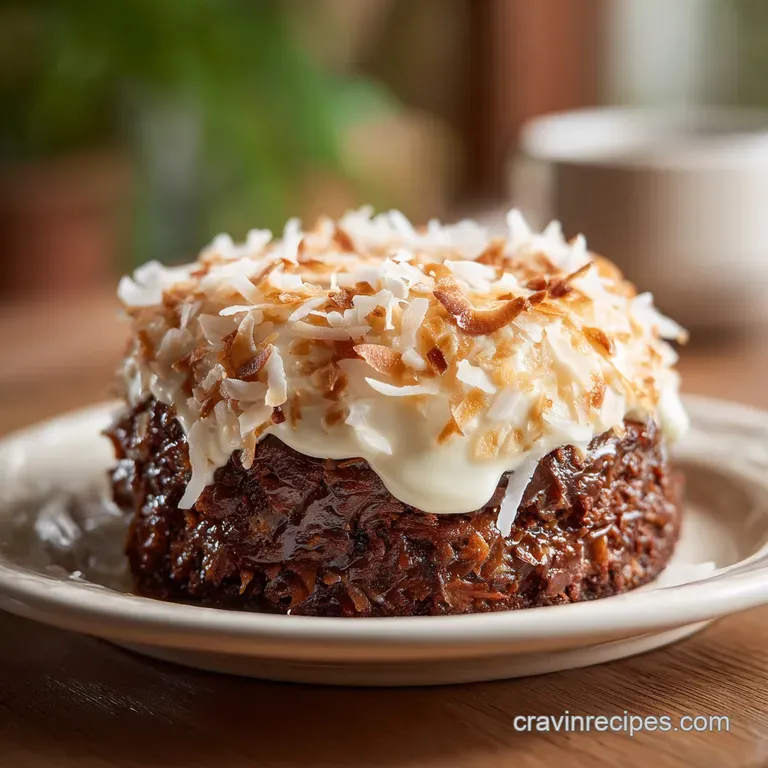
- Time: Active 30 mins, Passive 35 mins, Total 1 hour 5 mins
- Flavor/Texture Hook: Fudgy, nutty, and buttery
- Perfect for: Traditional birthdays and family celebrations
- Indulgent Homemade German Chocolate Cake
- The Physics of the Rise
- Component Analysis for Perfection
- Selecting the Finest Ingredients
- Tools for a Smooth Bake
- Steps to Layered Perfection
- Solving Common Baking Hurdles
- Scaling for Different Crowds
- Classic Baking Misconceptions
- Storage and Zero Waste
- Recipe FAQs
- 📝 Recipe Card
Indulgent Homemade German Chocolate Cake
I still remember the first time I tried to shortcut this recipe for a family reunion. I figured I could just throw the whole eggs into the batter instead of separating them. Big mistake. I ended up with a dense, heavy brick that smelled like heaven but felt like a lead weight.
That was the day I learned that the secret to a true German Chocolate Cake isn't just the chocolate, but the air you trap inside it.
Now, whenever I chop that mild, sweet chocolate bar and pour the boiling water over it, the aroma takes me right back to my grandmother’s kitchen. It’s a soft, delicate scent, not nearly as aggressive as dark cocoa, and it promises a dessert that is sweet and comforting.
When those pecans start toasting in the oven, filling the house with a nutty warmth, you know you’re about to create something special.
This isn't just another Chocolate Recipe where you dump everything in a bowl; it’s a process of layers and textures. We are going for a crumb that is light enough to let the heavy, gooey frosting shine. If you follow these steps, especially the egg white trick, you’ll get a result that is absolutely decadent without being cloying.
The Physics of the Rise
Protein Structural Support: Beating the egg whites into stiff peaks creates millions of tiny air bubbles that expand during baking, providing the lift needed to support the heavy batter. This mechanical leavening ensures the cake remains airy rather than turning into a dense brownie.
| Method | Time | Texture | Best For |
|---|---|---|---|
| Traditional Oven | 35 mins | Fluffy and light | Maximum height and airy crumb |
| Stovetop Frosting | 12 mins | Gooey and thick | Creating that iconic caramel base |
| Toaster Oven | 25 mins | Crispy edges | Small batch or individual layers |
Adding a splash of hot water to the chocolate isn't just for melting; it actually "blooms" the mild cocoa notes, making them more pronounced in the final bake. This technique is similar to how we handle the base in a classic Red Velvet Cake recipe to ensure the flavors are vibrant.
Component Analysis for Perfection
| Ingredient | Science Role | Pro Secret |
|---|---|---|
| German’s Chocolate | Mild sweetness | Chop finely to ensure it melts instantly in boiling water. |
| Buttermilk | Acidic tenderizer | Reacts with baking soda for a localized chemical lift. |
| Egg Whites | Structural aeration | Use a glass bowl to ensure no fat prevents peak formation. |
Selecting the Finest Ingredients
- German’s Sweet Baking Chocolate (4 oz): Chopped. Why this? It provides the specific mild, sweet flavor profile traditional to this cake.
- Substitute: Bittersweet chocolate with 1 extra tablespoon of sugar.
- Unsalted Butter (1 cup): Room temperature. Why this? Proper creaming with sugar requires soft, pliable fat for air incorporation.
- Substitute: Salted butter (omit the extra sea salt).
- Granulated Sugar (2 cups + 1 cup): Divided. Why this? Provides sweetness and helps stabilize the whipped egg whites.
- Substitute: Light brown sugar for a deeper molasses note.
- Large Eggs (4 cake, 3 frosting): Separated. Why this? The yolks add richness while the whites provide the necessary lift.
- Substitute: Flax eggs (note: cake will be much denser).
- All purpose Flour (2 ½ cups): Sifted. Why this? Provides the gluten structure required to hold the coconut pecan weight.
- Substitute: Cake flour for a more delicate, tender crumb.
- Buttermilk (1 cup): Room temperature. Why this? The acidity breaks down gluten for a softer mouthfeel.
- Substitute: 1 cup milk plus 1 tablespoon lemon juice.
- Evaporated Milk (1 cup): For frosting. Why this? Concentrated protein and fat create a stable, creamy custard base.
- Substitute: Heavy cream for a richer, less traditional frosting.
- Sweetened Shredded Coconut (1 ½ cups): Why this? Essential for the iconic texture and tropical sweetness.
- Substitute: Unsweetened coconut if you prefer a less sugary finish.
- Chopped Pecans (1 cup): Toasted. Why this? Toasting brings out oils and adds a shatter like crunch.
- Substitute: Toasted walnuts or hazelnuts.
Tools for a Smooth Bake
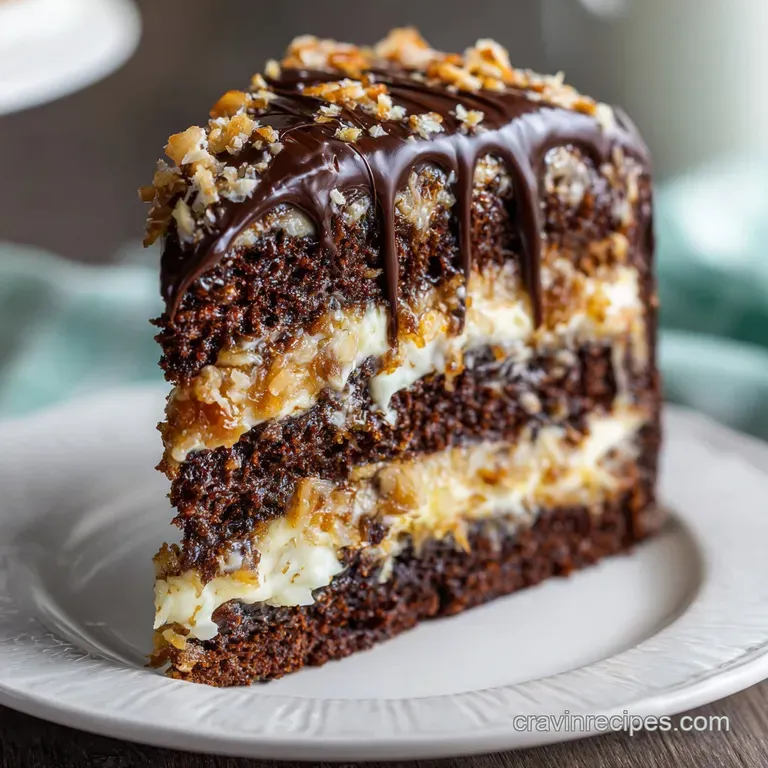
You will need two 9 inch round cake pans for this layered beauty. A stand mixer is your best friend here, especially for getting those egg whites to the perfect stiff peak stage. I also recommend a heavy bottomed saucepan for the frosting; thin pans tend to scorch the milk and eggs, which ruins the velvety custard.
Don't forget a fine mesh sieve for the flour and a silicone spatula. The spatula is vital for the "folding" stage you want to be gentle so you don't pop all those lovely air bubbles you worked so hard to create.
Finally,, an offset spatula will make spreading that gooey frosting much easier without tearing the delicate cake surface.
Steps to Layered Perfection
- Melt the chocolate. Pour ½ cup boiling water over the chopped 4 oz German’s Sweet Baking Chocolate. Note: Stir until the mixture is glossy and completely smooth.
- Cream the base. Beat 1 cup butter and 2 cups granulated sugar until light and fluffy. Note: This should take about 3 to 5 minutes for maximum aeration.
- Incorporate the yolks. Add 4 egg yolks one at a time, beating well after each addition. Note: The batter should look creamy and pale yellow.
- Add chocolate and vanilla. Blend in the melted chocolate mixture and 1 tsp vanilla extract. Stop when you smell the rich, sweet aroma of the combined fats and cocoa.
- Mix dry ingredients. Sift together 2 ½ cups flour, 1 tsp baking soda, and ½ tsp salt.
- Alternate liquids. Add the flour mixture and 1 cup buttermilk alternately to the batter. Note: Start and end with the flour to prevent the batter from curdling.
- Whip the whites. In a clean bowl, beat the 4 egg whites until stiff peaks form. Note: They should stand straight up when you lift the whisk.
- Fold gently. Fold the egg whites into the batter using a spatula. Note: Work in thirds and stop as soon as no white streaks remain.
- Bake the layers. Divide into pans and bake 35 mins until a toothpick comes out clean and the center springs back.
- Cook the frosting. Combine 1 cup evaporated milk, 1 cup sugar, 3 egg yolks, and ½ cup butter in a saucepan. Note: Cook over medium heat for 12 minutes until thickened and bubbling gently.
- Finish the topping. Remove from heat and stir in 1 tsp vanilla, 1 ½ cups coconut, and 1 cup toasted pecans. Note: Let it cool completely until it reaches a spreadable, gooey consistency.
Solving Common Baking Hurdles
Fixing Sunken Cake Centers
If the middle of your cake dips, it usually means the oven door was opened too early or the leavening agent was expired. The sudden drop in temperature causes the fragile air bubbles to collapse before the structure has set.
| Problem | Root Cause | Solution |
|---|---|---|
| Grainy Frosting | Sugar didn't dissolve | Cook longer on low heat before boiling. |
| Dry Crumb | Overbaked or low-fat | Check doneness 5 mins early; use full fat buttermilk. |
| Runny Topping | Under thickened custard | Simmer until it coats the back of a spoon. |
Common Mistakes Checklist
- ✓ Separating eggs while cold (they separate cleaner) but whipping them at room temp.
- ✓ Toasting pecans for 5-8 minutes until they smell nutty and fragrant.
- ✓ Sifting the flour to avoid lumps in the delicate whipped batter.
- ✓ Letting the cake layers cool 100% before applying the warm frosting.
- ✓ Using a completely grease free bowl for the egg whites to ensure volume.
Scaling for Different Crowds
If you are cooking for a smaller group, you can easily halve this recipe. Use 8 inch pans and reduce the bake time by about 5 to 8 minutes. For the egg whites, since the recipe calls for 4, just use 2.
If you need to double it for a large party, I suggest baking in two separate batches rather than crowding one oven, as the airflow is crucial for the rise.
Chef's Tip: If you're doubling the frosting, don't double the salt. Keep it at the original amount or just a pinch more to avoid an overly savory caramel.
Classic Baking Misconceptions
The most famous myth is that this cake comes from Germany. In reality, it was named after Samuel German, an American who developed the specific "German's Sweet Chocolate" bar for the Baker's Chocolate Company in 1852. The recipe didn't even gain national fame until a Dallas newspaper published it in 1957.
Another common belief is that the frosting must be served warm. While it’s delicious that way, letting the frosting cool completely allows the custard to set. This prevents the layers from sliding apart and ensures you get that perfect, thick bite of coconut and pecan in every mouthful.
Storage and Zero Waste
Store any leftover cake in an airtight container in the fridge for up to 5 days. Because of the dairy in the frosting, it shouldn't sit out at room temperature for more than 2 hours. For long term storage, you can freeze individual slices wrapped tightly in plastic wrap and foil for up to 3 months.
To reheat, let it thaw in the fridge overnight; don't microwave it, or the delicate custard will melt into a puddle.
If you have leftover egg yolks from the cake base (though this recipe uses most of them!), save them to make a quick lemon curd or add them to your morning scrambled eggs for extra richness. Any leftover toasted pecans are fantastic tossed into a salad or crushed over oatmeal the next morning.
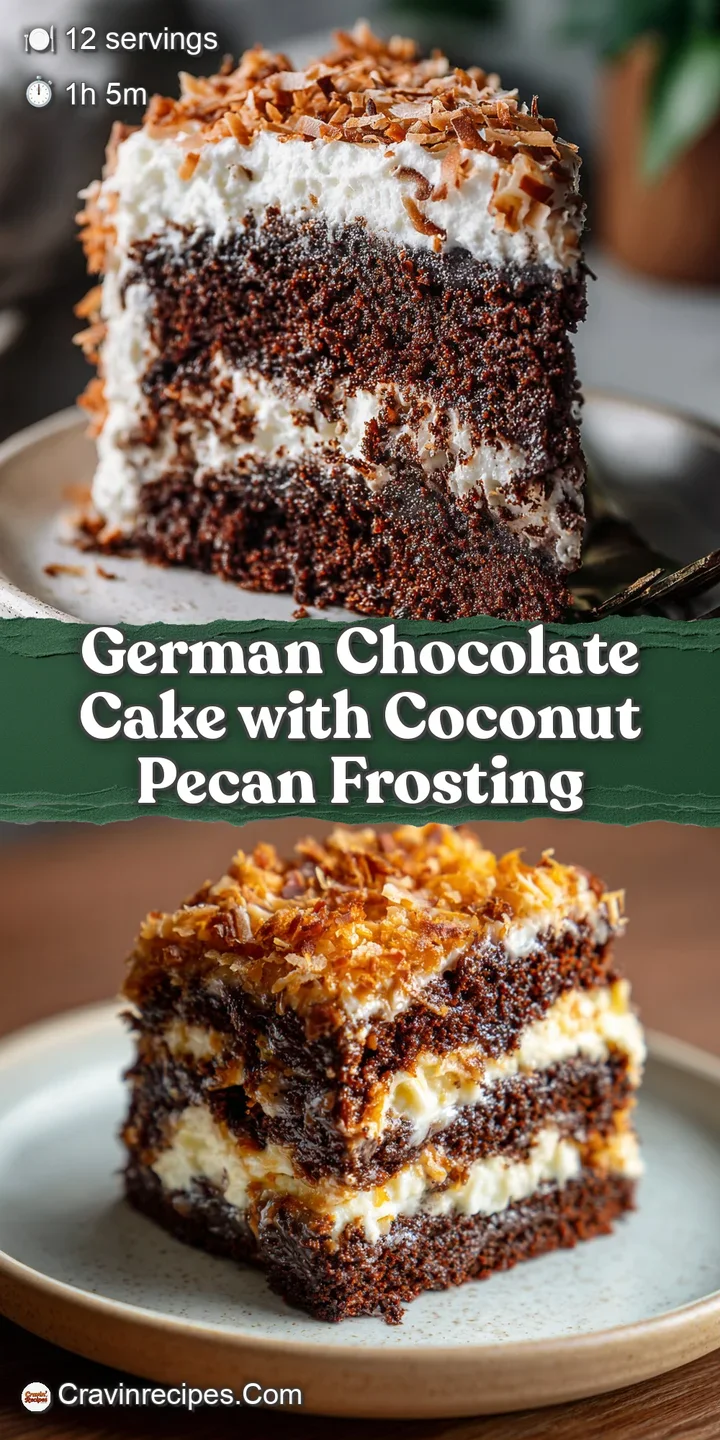
Recipe FAQs
What is a famous German chocolate?
German's Sweet Chocolate. This is the specific mildly sweet baking chocolate named after Samuel German, not chocolate sourced from Germany.
What makes German chocolate different from standard chocolate cake?
The coconut pecan custard frosting. The cake itself uses a mild, sweet chocolate bar base rather than dark cocoa powder, resulting in a softer flavor.
What is the origin of German chocolate?
It originated in America. It is named after Samuel German, who developed the specific baking bar for Baker's Chocolate Company in 1852.
What is the closest thing to German chocolate?
A fudge cake topped with praline custard. The key is achieving that sweet, gooey texture of the cooked evaporated milk, egg yolk, and nut topping.
Is it true I must use a stand mixer to get the proper height for the cake layers?
No, this is a common misconception. You must achieve stiff peaks for the egg whites, which is easier with a mixer, but you can achieve the same structural aeration by aggressively hand whisking if you have the endurance.
How to substitute the pecans in the traditional frosting?
Use toasted walnuts or slivered almonds. If you enjoyed mastering the careful temperature control needed to thicken the custard base, apply that same slow heating principle when using nut substitutions.
What is the closest thing to German chocolate if I prefer a simple layered dessert?
Turtle Cheesecake: Rich Cheesecake with Pecans. While technically a cheesecake, it shares the distinct combination of creamy, sweet dairy, pecans, and caramel like flavor notes.
Classic German Chocolate Cake
Ingredients:
Instructions:
Nutrition Facts:
| Calories | 763 kcal |
|---|---|
| Protein | 9.4g |
| Fat | 41.3g |
| Carbs | 85.3g |
| Fiber | 2.5g |
| Sugar | 65.2g |
| Sodium | 312mg |
