Coconut Shortbread Cookies: Buttery and Crisp
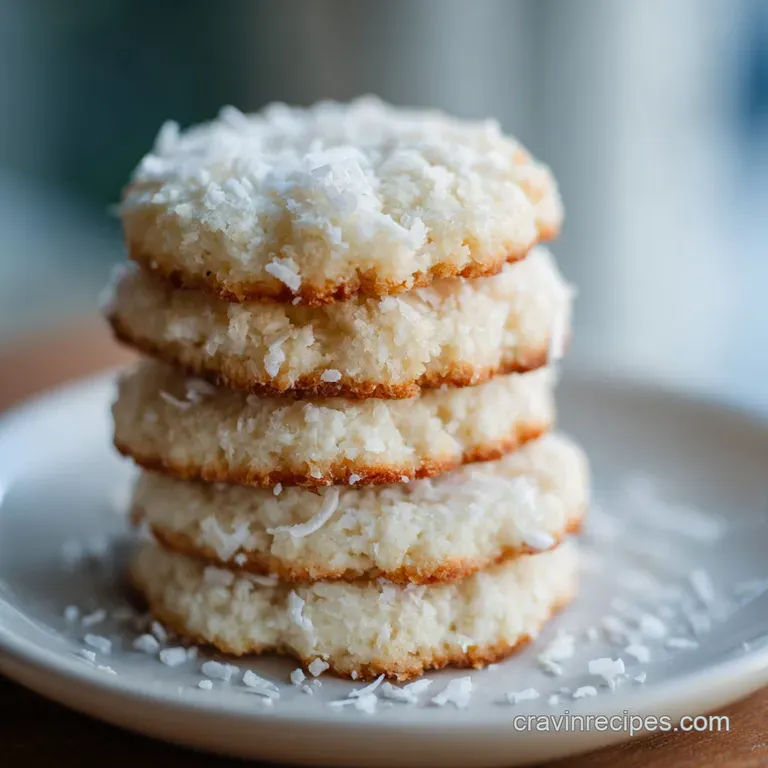
- Time:20 minutes active + 2 hours chilling + 15 minutes baking = 155 minutes total
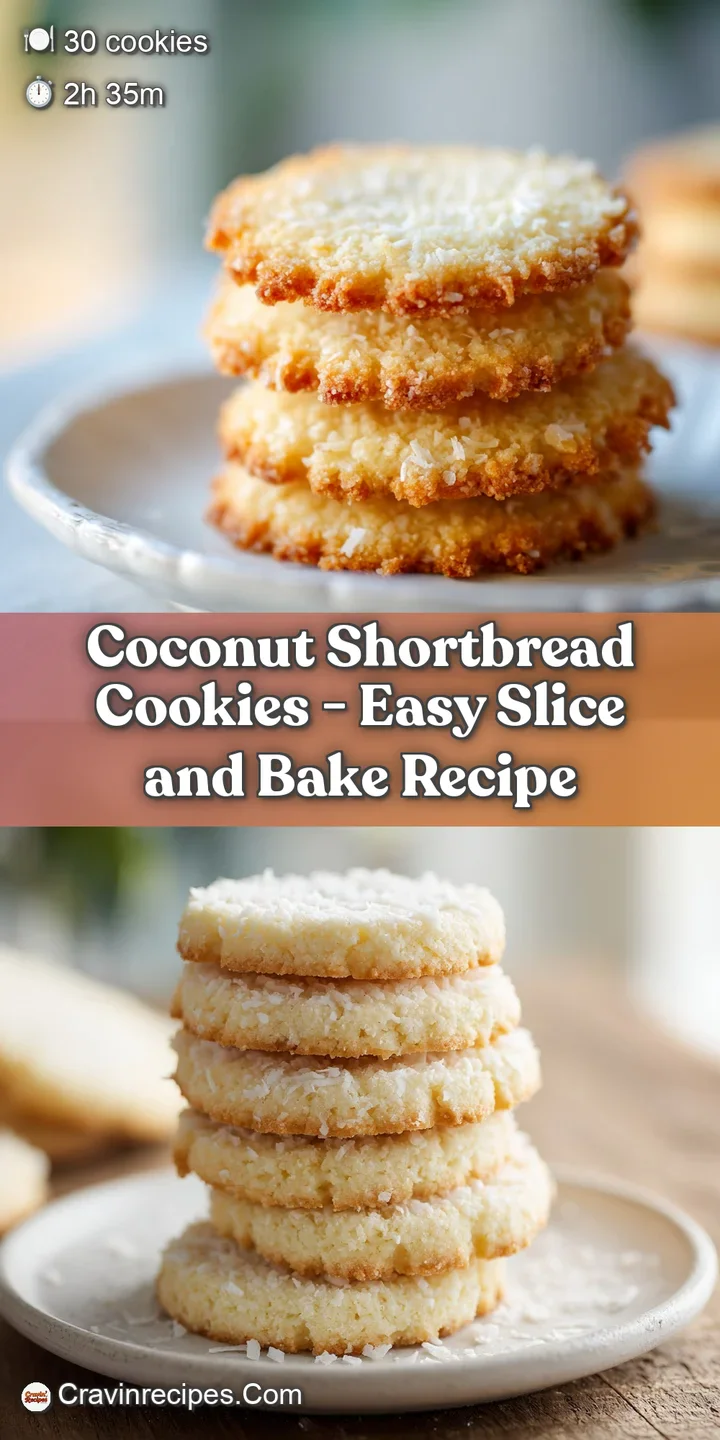
- Flavor/Texture Hook: Buttery, nutty, and crisp with a toasted coconut crunch
- Perfect for: Afternoon tea, holiday gifting, or a prep ahead dessert
- Mastering Slice Bake Coconut Shortbread Cookies
- Cookie Timing and Yield Details
- The Science of the Crumble
- Components for This Rich Dough
- Tools Needed for Professional Results
- The Full Step-by-Step Guide
- Solving Common Shortbread Baking Issues
- Handling Smaller or Larger Batches
- Debunking Shortbread Baking Myths
- Keeping Your Cookies Perfectly Fresh
- Serving Ideas for Sweet Success
- Recipe FAQs
- 📝 Recipe Card
Mastering Slice Bake Coconut Shortbread Cookies
The kitchen is currently filled with the scent of butter and toasted sugar, a combination that feels like a warm hug. If you have ever stepped into a classic Scottish bakery, you know that heavy, sweet aroma of shortbread being pulled from the oven.
Shortbread has been a staple since at least the 12th century, originally starting as "biscuit bread" that was twice baked to achieve its legendary dryness and crunch. Over time, it evolved into the butter heavy luxury we crave today, traditionally reserved for special occasions like Hogmanay or weddings.
It is a humble recipe at its core, relying on the simplest pantry staples, but the way those ingredients interact is pure magic.
When we introduce shredded coconut into this ancient equation, we are bridging the gap between the cool, misty Highlands and the sun drenched tropics. It might sound like an odd pairing, but the high fat content in coconut perfectly complements the rich, unsalted butter.
I remember the first time I tried a version of these. I was skeptical that the coconut would ruin that iconic shortbread "snap," but instead, it added a nutty depth that standard cookies just cannot reach. It is the kind of treat that makes you want to put the kettle on and settle in for a long chat with a friend.
We are going for a very specific texture here: a delicate crumble that dissolves on the tongue, followed by the chewy resistance of toasted coconut bits. There is no egg in this dough, which is the secret to that tight, sandy crumb that doesn't puff up or spread into a puddle.
By the time we are done, you will have a batch of cookies that look like they came from a high end boutique but taste like the best homemade comfort food you have ever had. Let's get into what makes these so structurally sound and flavor dense.
Cookie Timing and Yield Details
Before you start creaming that butter, it is helpful to look at the timeline. Shortbread is not a "right now" cookie because it demands patience. The total time of 155 minutes includes the critical window where the dough needs to rest and firm up.
Without that chill time, your cookies will lose their shape and the butter will leak out on the baking sheet before the flour has a chance to set.
| Method | Total Time | Texture | Best For |
|---|---|---|---|
| The Classic (Toasted) | 155 minutes | Complex, nutty, crisp | Maximum flavor depth |
| The Fast Track (Raw) | 150 minutes | Mild, milky, soft | Quick afternoon snack |
| The Frozen Log | 20 minutes | Extra snap, cold start | Emergency guests |
The difference between toasting your coconut and using it raw is monumental. Toasting for just 3 to 5 minutes in a dry skillet transforms the flavor from a simple sugary sweetness to a deep, savory nuttiness.
It also removes excess moisture from the coconut, which ensures the cookie stays crisp rather than becoming soggy over time. If you choose to skip the toasting, you'll still have a good cookie, but you'll miss out on that golden, aromatic "wow" factor that sets this recipe apart.
The Science of the Crumble
Understanding the mechanics of shortbread is what separates a decent home cook from a master baker. Since we aren't using leaveners like baking soda or eggs, we have to rely on the physical structure of fat and flour.
- Fat Interference: The high ratio of butter coats the flour proteins, preventing long gluten strands from forming, which results in a "short" or tender crumb.
- Starch Hydration: Resting the dough for 2 hours allows the flour to fully absorb the moisture from the butter and vanilla, preventing a gritty texture.
- Sugar Crystallization: Using granulated sugar provides a slight structural support and a crisp edge, while the turbinado sugar on the outside adds a heavy, crunchier finish.
- Maillard Reaction: Toasting the coconut beforehand creates new flavor compounds that wouldn't develop as effectively inside the dough while baking.
Component Deep Dive
| Ingredient | Science Role | Pro Secret |
|---|---|---|
| Unsalted Butter | Provides tender fat structure | Keep it cool softened, not greasy or melted |
| All Purpose Flour | Building block of the crumb | Sift it to avoid lumps in the dense dough |
| Shredded Coconut | Texture and aromatic oils | Use unsweetened to control the sweetness level |
The butter is the star of the show here. If it is too warm, it won't cream properly with the sugar, and your dough will be oily. You want it just soft enough that your finger leaves an indentation, but not so soft that it’s shiny.
This creates tiny air pockets during the mixing process that give the shortbread its lightness without needing a chemical lift.
Components for This Rich Dough
To get the most indulgent results, you really want to pay attention to the quality of your ingredients. Since there are so few items in the list, each one has a lot of work to do.
- 1 cup unsalted butter, softened but coolWhy this? Provides the foundational flavor and the characteristic "short" texture.Sub: Salted butter (reduce added sea salt to a pinch).
- 0.5 cup granulated sugarWhy this? Sweetens without adding the moisture or weight of brown sugar.Sub: Caster sugar for an even finer, more delicate melt.
- 1 tsp pure vanilla extractWhy this? Acts as a flavor bridge between the butter and the coconut.Sub: Almond extract for a more intense, nutty profile.
- 2 cups all purpose flourWhy this? Provides enough protein for structure while keeping the bite tender.Sub: A 1 to-1 gluten-free flour blend with xanthan gum.
- 0.25 tsp fine sea saltWhy this? Cuts through the richness of the fat and brightens the coconut.Sub: Table salt (use slightly less as it is more dense).
- 1 cup unsweetened shredded coconutWhy this? Adds the signature tropical flavor and a chewy, toasted texture.Sub: Desiccated coconut for a more uniform, sandy appearance.
- 2 tbsp turbinado sugarWhy this? Used for coating the log to give a professional, sparkly crunch.Sub: Sparkling sugar or extra granulated sugar.
| Original Ingredient | Substitute | Why It Works |
|---|---|---|
| Granulated Sugar | Caster Sugar | Finer grains dissolve faster for a smoother dough texture |
| Vanilla Extract | Coconut Extract | Doubles down on the tropical notes. Note: Very potent, use half. |
| All Purpose Flour | Pastry Flour | Lower protein content makes for an even more delicate crumble |
When choosing your coconut, try to find "unsweetened shredded" rather than the big flakes or the finely powdered desiccated version. The shreds are long enough to provide a nice visual element and a distinct texture, but small enough that they don't interfere with the clean slicing of the dough log.
If you can only find sweetened coconut, you might want to reduce the granulated sugar by a tablespoon to keep things from becoming cloying.
Tools Needed for Professional Results
You don't need a high tech kitchen to pull this off, but a few specific items will make your life much easier. A heavy skillet is essential for toasting the coconut evenly. If you use a thin pan, the coconut will burn in spots before the rest of it even gets warm.
I prefer a cast iron or a heavy stainless steel pan for this task.
For the dough itself, a stand mixer is great, but a hand mixer works just as well. The goal is to cream the butter and sugar without whipping too much air into it we aren't making a sponge cake, after all. You also need a very sharp knife for the slicing stage.
A serrated knife, like a bread knife, is actually your best friend here. The tiny teeth saw through the coconut shreds without squishing the chilled butter log into an oval shape.
- Heavy Skillet: For even heat distribution during the coconut toasting phase.
- Mixing Bowl: Large enough to handle the flour without a "dust storm" effect.
- Parchment Paper: Essential for rolling the logs and lining the baking sheets.
- Serrated Knife: Allows for clean, sharp cuts through the chilled dough.
- Cooling Rack: Prevents the bottoms of the cookies from getting soggy after baking.
The Full step-by-step Guide
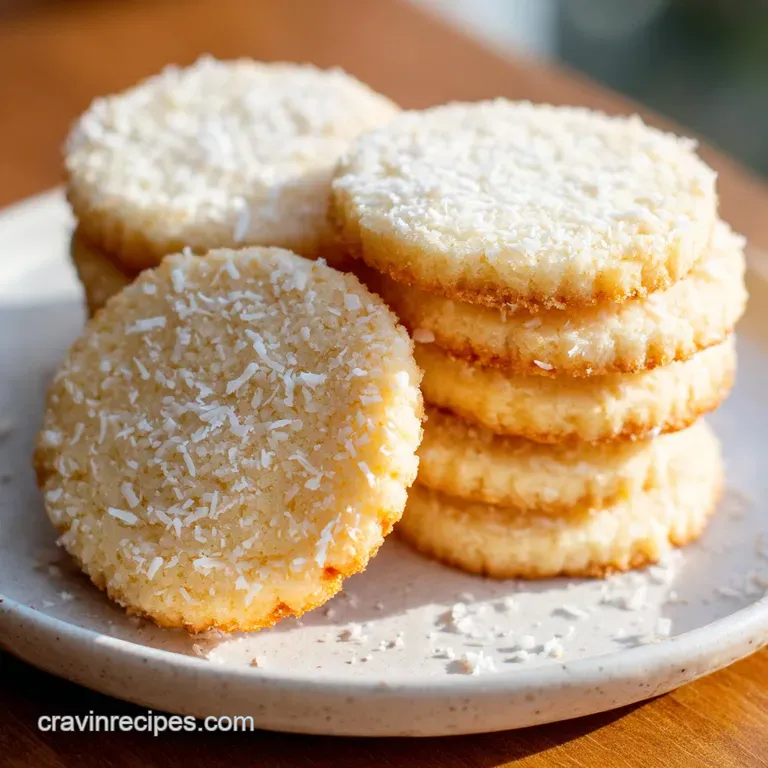
- Place 1 cup unsweetened shredded coconut in a dry skillet over medium low heat. Stir constantly for 3 to 5 minutes until golden and fragrant. Note: Watch it closely as it goes from golden to burnt in seconds.
- Transfer the toasted coconut to a plate and spread it out to cool completely. Note: Adding hot coconut to butter will melt your dough structure.
- In a large mixing bowl, beat the 1 cup of cool softened butter and 0.5 cup granulated sugar until smooth and pale, which takes approximately 2 minutes.
- Mix in the 1 tsp vanilla extract and 0.25 tsp fine sea salt until fully incorporated.
- Add the 2 cups of all purpose flour in two separate batches, mixing on the lowest speed until just combined. Note: Overmixing at this stage will make the cookies tough.
- Fold in the cooled toasted coconut by hand using a spatula to ensure even distribution without breaking the shreds.
- Divide the dough in half and roll each portion into a log approximately 2 inches in diameter.
- Roll the logs in 2 tbsp turbinado sugar to coat the exterior, pressing gently so the sugar adheres.
- Wrap the logs tightly in parchment paper and refrigerate for at least 2 hours until the dough feels very firm.
- Preheat your oven to 350°F (175°C). Use a sharp serrated knife to slice the chilled logs into rounds about 1/4 inch thick.
- Place the rounds on baking sheets and bake for 15 minutes until the edges are lightly golden.
- Let the cookies cool on the sheet for 5 minutes before moving them to a wire rack to finish.
Chef's Tip: If you find your dough log is flattening on one side in the fridge, place the wrapped log inside an empty paper towel roll that has been slit lengthwise. This acts as a cradle to keep your cookies perfectly circular!
Solving Common Shortbread Baking Issues
The most frustrating thing that can happen with slice bake coconut shortbread cookies is having them turn out greasy or losing their shape in the oven. This usually happens because the butter got too warm at some point in the process.
Shortbread relies on the fat staying in its own little "pockets" until the heat of the oven sets the flour around it.
Your Cookies Spread Too Much
If your cookies look like flat pancakes, it is almost always a temperature issue. Either the butter was too soft when you started mixing, or the dough wasn't chilled long enough. Even if the log feels firm to the touch, the core might still be too soft. Give it the full 2 hours.
Also, make sure you aren't placing your sliced dough onto a hot baking sheet from a previous batch.
The Log is Crumbling While Slicing
This usually happens if the dough is too cold or if there isn't enough moisture. If you let the log sit on the counter for 5 or 10 minutes before slicing, it should soften just enough to allow the knife to pass through without shattering the edges.
Using a serrated knife is also a huge help here, as it "saws" through the coconut rather than "crushing" it.
| Problem | Root Cause | Solution |
|---|---|---|
| Greasy Bottoms | Butter was over creamed or too warm | Chill sliced cookies for 10 mins before baking |
| Bland Flavor | Coconut wasn't toasted enough | Ensure coconut is a deep golden brown next time |
| Tough Texture | Overworked the flour/gluten | Stop mixing as soon as the flour disappears |
Common Mistakes Checklist
- ✓ Never use melted butter; it destroys the sandy crumble of the shortbread.
- ✓ Ensure the toasted coconut is 100% cool before adding it to the butter mixture.
- ✓ Don't skip the salt; it's what makes the coconut and butter flavors "pop."
- ✓ Use a serrated knife for slicing to keep the cookies round and intact.
- ✓ Avoid over baking; shortbread should be pale on top, only golden on the very edges.
Handling Smaller or Larger Batches
If you want to scale this recipe, shortbread is quite forgiving as long as you keep the ratios intact.
- Scaling DOWN (1/2 batch): Use 1/2 cup butter, 1/4 cup sugar, and 1 cup flour. For the salt and vanilla, just use a "generous half" of the measurements. Keep the bake time and temperature the same, but watch them at the 12 minute mark since a smaller oven load can sometimes cook faster.
- Scaling UP (2x batch): You can easily double this. Use 2 cups butter, 1 cup sugar, and 4 cups flour. Increase the salt to 1/2 tsp. When doubling, it's best to work in two separate batches for the toasting of the coconut to ensure even browning. You can roll 4 smaller logs instead of 2 giant ones for easier handling.
For another decadent treat that uses a similar flavor profile, try my Chocolate Coconut Balls. They are no bake and offer a different way to use up any leftover shredded coconut you might have from this bake.
Debunking Shortbread Baking Myths
There is a common myth that you need to use "European style" butter with high fat content for good shortbread. While the extra fat is nice, standard grocery store unsalted butter works perfectly well. The key is the temperature and the technique, not necessarily the price tag on the butter wrapper.
As long as it is real butter (not margarine), you will get a delicious result.
Another misconception is that you need to prick the tops with a fork (docking) to keep them from rising. Traditional large shortbread rounds are docked to prevent air bubbles, but for small, individual slice and-bake cookies, this isn't necessary. The dough is dense enough that it won't puff up significantly.
If you like the look, go for it, but it won't change the structural outcome of this specific recipe.
Keeping Your Cookies Perfectly Fresh
One of the best things about this recipe is how well it keeps. Because of the high fat content and low moisture, these cookies don't go stale nearly as fast as a chocolate chip cookie would.
Storage: Store your baked cookies in an airtight container at room temperature for up to 1 week. If you live in a very humid environment, you might want to tuck a piece of white bread into the container; it will absorb the excess moisture and keep your cookies crisp.
Freezing: You can freeze the baked cookies for up to 2 months. However, the best way to freeze these is in their raw "log" form. Wrap the logs in plastic wrap, then a layer of foil. When you are ready for a fresh cookie, just thaw the log for about 15 minutes, slice, and bake.
It’s like having a gourmet bakery in your freezer.
Zero Waste Tip: Don't throw away those tiny, misshapen end pieces from the dough log! Bake them anyway. They make the perfect "taster" pieces, or you can crush them up and use them as a buttery, coconutty topping for vanilla ice cream.
Even the turbinado sugar that falls off the log can be saved and used in your morning coffee.
Serving Ideas for Sweet Success
These cookies are sophisticated enough to stand on their own, but they also play well with others. Since they are quite rich, they pair beautifully with a sharp, acidic drink like a strong Earl Grey tea with a squeeze of lemon or a bitter black coffee.
The citrus notes in the tea cut through the butter, while the coffee highlights the toasted notes of the coconut.
If you are putting together a dessert platter, try pairing these with something soft and creamy to provide a texture contrast. They would be incredible served alongside a bowl of Homemade Banana Pudding or a simple lemon posset. The snap of the cookie against a velvety pudding is the ultimate sensory experience. If you want to get fancy, you could even dip half of each cookie into melted dark chocolate and sprinkle a tiny bit more toasted coconut on top. It turns them into a tropical "Samoa" style treat that is absolutely indulgent. Honestly, though, my favorite way to eat them is standing in the kitchen, still slightly warm from the tray, with a cold glass of milk. There is nothing better than that first, buttery, coconut filled bite.
Recipe FAQs
Why is my shortbread crumbly instead of holding its shape?
This usually happens because the dough was not chilled long enough or the butter was too warm. You must refrigerate the logs for at least 2 hours to allow the butter to firm up and the flour to fully hydrate, which creates a stable structure for slicing.
How to ensure the coconut is toasted perfectly?
Stir the coconut constantly in a dry skillet over medium low heat for 3 5 minutes. Watch it closely and transfer it to a plate immediately once golden to prevent carryover cooking from burning the shreds.
Is it true that I can use melted butter to save time?
No, this is a common misconception. You must use softened but cool butter; melting it destroys the signature sandy, delicate crumble that defines true shortbread.
How to get clean slices without crushing the dough?
Use a sharp serrated knife to gently saw through the chilled log. This technique prevents the dough from compressing or losing its circular shape while you cut.
How to tell when these cookies are finished baking?
Bake at 350°F (175°C) for 15 minutes until the edges are lightly golden. The tops should remain pale; if you enjoy mastering these sensory doneness cues, apply the same attention to detail when making our moist pumpkin cake for perfect results.
Can I add extra ingredients like chocolate chips?
No, stick to the official ingredient list to maintain the proper texture. Adding extra bulk will disrupt the precise ratio of flour, butter, and coconut required for the correct shortbread snap.
How to store these cookies to keep them crisp?
Keep them in an airtight container at room temperature once fully cooled. They will stay fresh for several days, but avoid putting them in the refrigerator, as the moisture can soften their crisp texture.
Coconut Shortbread Cookies
Ingredients:
Instructions:
Nutrition Facts:
| Calories | 121 kcal |
|---|---|
| Protein | 1.1 g |
| Fat | 8.2 g |
| Carbs | 11.2 g |
| Fiber | 0.6 g |
| Sugar | 4.2 g |
| Sodium | 21 mg |
