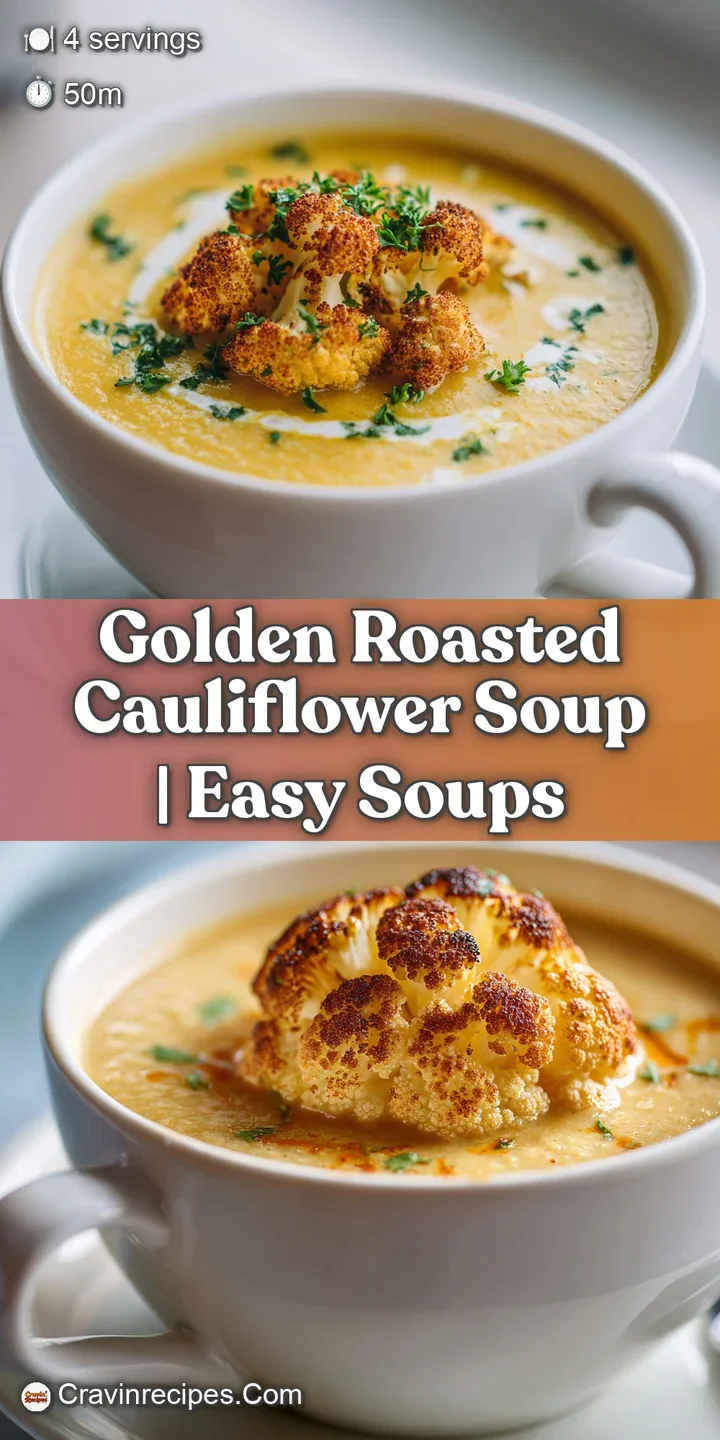
Golden Roasted Cauliflower Soup

- Time: Active 15 minutes, Passive 35 minutes, Total 50 minutes
- Flavor/Texture Hook: Smoked and velvety with a nutty, roasted finish
- Perfect for: Chilly weeknight comfort or low prep meal planning
- Finding Comfort in Roasted Cauliflower Soup
- Secrets to Achieving Silky Textures
- Essential Stats for Successful Prep
- Elements of a Hearty Base
- Simple Tools for Big Flavor
- Easy Steps for Roasted Success
- Avoiding Common Flavor Pitfalls
- Clever Ways to Swap Ingredients
- Managing Leftovers and Freezer Stash
- Best Sides for Comfort Bowls
- Kitchen Truths Debunked
- Very High in Sodium
- Recipe FAQs
- 📝 Recipe Card
Finding Comfort in Roasted Cauliflower Soup
It was one of those biting Tuesday evenings in late October when the wind just doesn't quit, and the house feels a little drafty no matter how high the heat is set. I remember standing in the kitchen, staring at a massive head of cauliflower that had seen better days, wondering how to turn it into something my family would actually cheer for.
I wanted something hearty and fuss free, the kind of meal that makes you want to curl up on the sofa with a warm bowl and a thick slice of crusty bread.
The magic happened when I decided to skip the usual steaming method and threw everything onto a single baking sheet instead. The smell of roasting garlic and charred cauliflower started wafting through the house, and suddenly, the "boring" vegetable felt like a treat.
That sizzle of the oil against the hot pan was the first sign that this wasn't going to be your typical bland, watery vegetable mash. It was the birth of a new family favorite that we now make every time the temperature drops below fifty degrees.
We aren't doing anything gourmet or complex here. This is straightforward, honest cooking that uses the oven to do all the heavy lifting. By the time the florets are golden and the garlic is soft enough to squeeze like butter, you're more than halfway to a meal that feels like a warm hug.
It’s the ultimate no fuss solution for a busy night when you need comfort but don't want to stand over a stove for an hour.
Secrets to Achieving Silky Textures
Flavor Growth Through Heat Reaction
Dry Heat Development: Roasting the cauliflower at 425°F (220°C) triggers a chemical change where natural sugars brown and intensify. This creates a deeply savory profile that provides more depth than boiling ever could.
Silkiness Without Heavy Dairy Additions
High Speed Emulsion: When you blend the roasted vegetables with almond milk and olive oil, the fats break down into microscopic droplets. These droplets remain suspended in the liquid, creating a velvety mouthfeel that mimics the richness of heavy cream.
Balancing Flavors With Citrus Acidity
pH Adjustment: Cauliflower belongs to the cruciferous family, which can sometimes carry a bitter or heavy note. Adding fresh lemon juice at the very end acts as a brightener, cutting through the earthiness and making the whole bowl sing.
| Method | Time | Texture | Best For |
|---|---|---|---|
| Stovetop Only | 25 minutes | Chunky/Grainy | Quick lunches with less depth |
| Roasted (This Recipe) | 50 minutes | Silky/Velvety | Deep flavor and cozy dinners |
| Slow Cooker | 4 hours | Soft/Mashed | Hands off prep for busy days |
The choice between stovetop and roasting really comes down to how much flavor you want to extract from the vegetables. While the stovetop is faster, it lacks that mahogany char that defines this specific bowl.
Roasting might take a bit longer, but the hands off time in the oven allows the natural flavors to concentrate and sweeten, which is why I always recommend the extra twenty minutes of roasting.
Essential Stats for Successful Prep
| Component | Science Role | Pro Secret |
|---|---|---|
| Cauliflower | Structural Bulk | Roast until the edges look slightly burnt for the best nuttiness |
| Garlic Cloves | Aromatic Depth | Leave the skins on while roasting to prevent the flesh from turning bitter |
| Nutritional Yeast | Umami Source | It provides a cheesy, savory backbone without needing actual dairy products |
| Olive Oil | Fat Carrier | Use a high-quality oil as it helps emulsify the soup into a silky finish |
Most people make the mistake of peeling their garlic before it goes into the oven. Keeping those cloves in their little paper jackets protects the delicate sugars inside from scorching. Instead of bitter, acrid bits, you end up with a creamy, sweet paste that blends perfectly into the liquid base.
Elements of a Hearty Base
Elements for the Roasted Base
- 1 large head cauliflower (approx. 2 lbs / 900g): Trim into bite sized florets. Why this? Smaller pieces provide more surface area for that golden, savory char.
- 1 medium yellow onion (150g): Peeled and cut into quarters. Why this? Roasted onion adds a subtle sweetness that balances the earthy cauliflower.
- 4 cloves garlic: Keep the skins on for roasting. Why this? Protects the garlic from burning while it softens into a sweet paste.
- 3 tbsp (45ml) extra virgin olive oil: Use for coating the veggies. Why this? Essential for heat transfer and creating that signature silky mouthfeel later.
- 1 tsp (5g) sea salt: Standard seasoning for flavor.
- 1/2 tsp (1g) cracked black pepper: Adds a gentle heat.
- 1/2 tsp (1g) smoked paprika: Why this? Provides a faint wood fired aroma that mimics a professional kitchen setup.
Components for the Velvety Liquid
- 4 cups (950ml) low sodium vegetable broth: The liquid foundation. Why this? Keeps the sodium levels manageable so you can season to your own taste.
- 1 cup (240ml) unsweetened almond milk: Why this? Adds creaminess while keeping the recipe plant based and light.
- 2 tbsp (10g) nutritional yeast: Why this? This is the secret to that "cheesy" flavor without using a block of cheddar.
- 1 tbsp (15ml) fresh lemon juice: Why this? The final acid hit that wakes up all the other ingredients.
Simple Tools for Big Flavor
You don't need a kitchen full of gadgets to get this right. I’m a huge fan of minimal tool cooking because nobody wants to spend their evening doing dishes. A sturdy, rimmed baking sheet is your most important asset here.
It needs to be large enough that the cauliflower isn't overcrowded; if they're too close together, they'll steam rather than roast, and you'll miss out on those crispy, mahogany edges.
A parchment paper liner is a lifesaver for cleanup, but it also prevents the vegetables from sticking to the pan and tearing. For the blending stage, a high speed upright blender is my go to for that truly velvety texture.
If you only have an immersion blender, it’ll work, but you might have a slightly rustier, more textured finish. Just make sure your Dutch oven is deep enough to prevent splattering if you go the handheld route.
Easy Steps for Roasted Success

- Preheat your oven to 425°F (220°C). Toss the cauliflower florets, quartered onion, and whole garlic cloves in a large bowl with the olive oil, sea salt, black pepper, and smoked paprika until every crevice is evenly coated.
- Spread the vegetables in a single layer on a parchment lined baking sheet. Note: Overcrowding the pan causes the vegetables to steam instead of roast, so use two sheets if necessary.
- Roast for 25-30 minutes, tossing the pieces halfway through the time, until the cauliflower edges achieve a deep mahogany char.
- Remove the tray from the oven and let the vegetables cool for just a minute. Squeeze the roasted garlic cloves out of their softened skins directly into a large Dutch oven or heavy bottomed pot.
- Add the roasted cauliflower, charred onion, vegetable broth, unsweetened almond milk, and nutritional yeast to the pot.
- Bring the mixture to a gentle simmer over medium heat for 5 minutes until the flavors begin to meld and the aroma fills the room.
- Carefully transfer the mixture to a high speed upright blender. Note: Work in batches if your blender is small to avoid the lid popping off from the steam pressure.
- Blend on the highest setting until the soup is completely smooth and reaches a velvety, silky consistency.
- Return the blended soup to the pot over low heat.
- Stir in the fresh lemon juice to brighten the flavor profile. Taste one last time and adjust the salt or pepper to your preference before ladling into bowls.
Avoiding Common Flavor Pitfalls
Fixing Grainy or Gritty Textures
Sometimes, despite your best efforts, the soup can feel a bit "sandy" on the tongue. This usually happens if the cauliflower wasn't roasted long enough to soften the core or if the blender didn't run quite long enough. If you’re using an older blender, you might need to let it run for a full 60 seconds.
If it's already blended and still grainy, passing it through a fine mesh sieve can save the day.
Preventing Strong Cruciferous Aromas
We’ve all been in a kitchen that smells like boiled cabbage for three days. To avoid that sulfurous scent, roasting is your best friend. The dry heat of the oven allows those pungent compounds to evaporate rather than being trapped in the cooking water.
If you still find the flavor too "cabbage forward," try adding an extra splash of almond milk or a small pinch of nutmeg to mellow out the earthiness.
| Problem | Root Cause | Solution |
|---|---|---|
| Soup is too thin | Too much broth added initially | Simmer uncovered for 10 minutes to reduce or add a mashed potato |
| Flavor is flat | Lack of acidity or salt | Add another teaspoon of lemon juice or a pinch of sea salt |
| Bitter aftertaste | Burnt garlic cloves | Ensure garlic stays in skins; if already bitter, add a tiny pinch of sugar |
For another comforting one pot meal that the whole family will love, you might want to try my Cheeseburger Soup. It has that same creamy satisfaction but with a totally different flavor profile.
Common Mistakes Checklist
- ✓ Never crowd the baking sheet - give those florets room to breathe so they crisp up.
- ✓ Don't skip the lemon juice at the end; it's the difference between a "flat" soup and a vibrant one.
- ✓ Avoid peeling the garlic before roasting, or it will likely burn and turn bitter in the high heat.
- ✓ Let the steam escape slightly from the blender lid to prevent a "soup explosion" in your kitchen.
- ✓ Use low sodium broth so you can control the final saltiness yourself.
Clever Ways to Swap Ingredients
If you're looking to scale this down for a solo lunch, you can easily halve the recipe. Use a smaller baking sheet and reduce the roasting time by about 5 minutes, as fewer vegetables will cook faster.
If you're doubling it for a big family gathering, keep the salt and spices at about 1.5 times the original amount first, then taste and add more. Doubling the spices right away can sometimes overwhelm the delicate cauliflower flavor.
For those who want a more traditional dairy experience, you can swap the almond milk for whole milk or even a splash of half and half. If you prefer a more "stew like" feel, check out my Cabbage Roll Soup recipe for a chunkier alternative that still uses that hearty vegetable base.
| Original Ingredient | Substitute | Why It Works |
|---|---|---|
| Vegetable Broth | Chicken Bone Broth | Adds more protein and a richer, meatier undertone. |
| Almond Milk | Full fat Coconut Milk | Creates a much thicker, tropical leaning creaminess. Note: Will add a coconut scent. |
| Nutritional Yeast | Parmesan Cheese | Provides the same salty, savory hit if you aren't strictly vegan. |
Managing Leftovers and Freezer Stash
This soup stays fresh in the fridge for up to 4 days, and honestly, the flavors often settle and improve by the second day. Just store it in an airtight glass container. When you're ready to eat, reheat it on the stovetop over medium low heat.
You might find it has thickened up quite a bit in the fridge, so don't be afraid to whisk in a splash of water or extra broth to bring back that silky texture.
For long term storage, this is a freezer superstar. It will keep well for up to 3 months. I recommend freezing it in individual portions so you can grab a quick lunch whenever you need it. Just remember to leave about an inch of space at the top of your container, as the liquid will expand when it freezes.
To use up any leftover cauliflower stalks, don't throw them away! You can peel the tough outer skin, chop the tender inner core, and roast it right along with the florets.
Best Sides for Comfort Bowls
While this soup is plenty filling on its own, it loves a good partner. A thick slice of sourdough toast rubbed with a raw garlic clove is the classic choice. If you want something with a bit more crunch, try making homemade croutons by tossing stale bread cubes with olive oil and a pinch of that smoked paprika we used in the soup.
For a fuller meal, a simple side salad with a sharp vinaigrette provides a nice contrast to the creamy, roasted flavors of the cauliflower. If you're feeling adventurous, top the bowl with a swirl of pesto or a handful of toasted pine nuts.
The added texture of the nuts against the velvety soup is a match made in heaven. Whatever you choose, keep it simple the star of the show is that beautifully charred, roasted flavor you worked so hard to create.
Kitchen Truths Debunked
Many people believe you have to use heavy cream to get a soup this smooth. That’s simply not true! The combination of roasted starch from the cauliflower and a high speed blend creates a natural emulsion that is just as satisfying as dairy.
I used to think I needed a roux for every soup, but the cauliflower itself acts as the thickening agent here.
Another common myth is that frozen cauliflower can't be roasted. While fresh is definitely the gold standard for getting those crispy edges, you can roast frozen florets! Just make sure to roast them directly from frozen at a slightly higher temperature (450°F) to help evaporate the extra moisture quickly so they don't get soggy.
The char won't be quite as intense, but the flavor will still be miles ahead of any canned version.
Very High in Sodium
845 mg of sodium per serving (37% of daily value)
The American Heart Association recommends limiting sodium intake to less than 2,300mg per day and an ideal limit of no more than 1,500mg per day for most adults.
Tips to Reduce Sodium
-
Switch to No-Salt Added Broth-30%
The low-sodium vegetable broth is a significant sodium contributor. Opting for a no-salt added vegetable broth will drastically cut down the sodium content.
-
Halve the Added Sea Salt-25%
Reduce the sea salt from 1 tsp to 1/2 tsp. You can always add a pinch more salt at the table if needed, but this change alone will make a difference.
-
Use Nutritional Yeast Sparingly-10%
While nutritional yeast adds a cheesy flavor, some brands can contain moderate amounts of sodium. Check the label and consider using slightly less if a high sodium variety is used.
-
Boost Flavor with Fresh Herbs and Spices
Enhance the taste with fresh herbs like parsley or chives, and consider other spices like garlic powder (without added salt) or onion powder to add complexity without salt.
-
Maximize Lemon Juice-5%
The fresh lemon juice provides brightness. Increasing its amount slightly can help compensate for reduced saltiness and enhance the overall flavor profile.
Recipe FAQs
What makes Jamie Oliver's cauliflower soup special?
The secret is roasting the vegetables until they achieve a deep mahogany char. By roasting the cauliflower, onion, and garlic with smoked paprika before simmering, the soup develops a complex, caramelized depth that boiled cauliflower lacks.
What are the ingredients for cauliflower soup?
This recipe uses a large head of cauliflower, yellow onion, four cloves of garlic, olive oil, sea salt, cracked black pepper, and smoked paprika. The liquid base consists of low-sodium vegetable broth and unsweetened almond milk, finished with nutritional yeast and fresh lemon juice.
Which soup is best for diabetics?
This cauliflower soup is an excellent choice for diabetics due to its low glycemic index. It relies on high fiber cauliflower rather than starchy potatoes to create a creamy texture, and it contains no added sugars or refined carbohydrates.
Which soup is good for gastritis?
This soup is generally gentle on the stomach if you tolerate roasted vegetables well. Because it is blended into a smooth, velvety consistency, it is easier to digest than chunky vegetable soups, though you may want to reduce the smoked paprika if you are sensitive to spices.
How to roast the cauliflower properly for the best flavor?
Preheat your oven to 425°F (220°C) and spread the florets in a single layer on a parchment lined sheet. Giving the vegetables room to breathe ensures they roast and crisp rather than steam, which is essential for that deep mahogany char.
Is it true that I should peel the garlic before roasting?
No, this is a common misconception that will lead to bitter results. Always keep the garlic skins on during the 25-30 minutes of roasting; the skins protect the cloves from burning and turning bitter, allowing you to squeeze out perfectly soft, roasted garlic afterward.
How to safely blend hot soup in a high speed blender?
Let the steam escape slightly from the blender lid while you process the mixture. Trapped steam creates pressure that can cause a dangerous "soup explosion," so leave a small opening or remove the center cap to vent the heat safely.
Roasted Cauliflower Soup

Ingredients:
Instructions:
Nutrition Facts:
| Calories | 201 kcal |
|---|---|
| Protein | 6.9 g |
| Fat | 12.1 g |
| Carbs | 19.3 g |
| Fiber | 5.8 g |
| Sugar | 6.2 g |
| Sodium | 845 mg |
