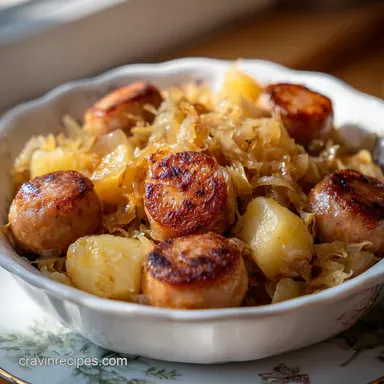
Polish Casserole: Failure-Proof and Hearty
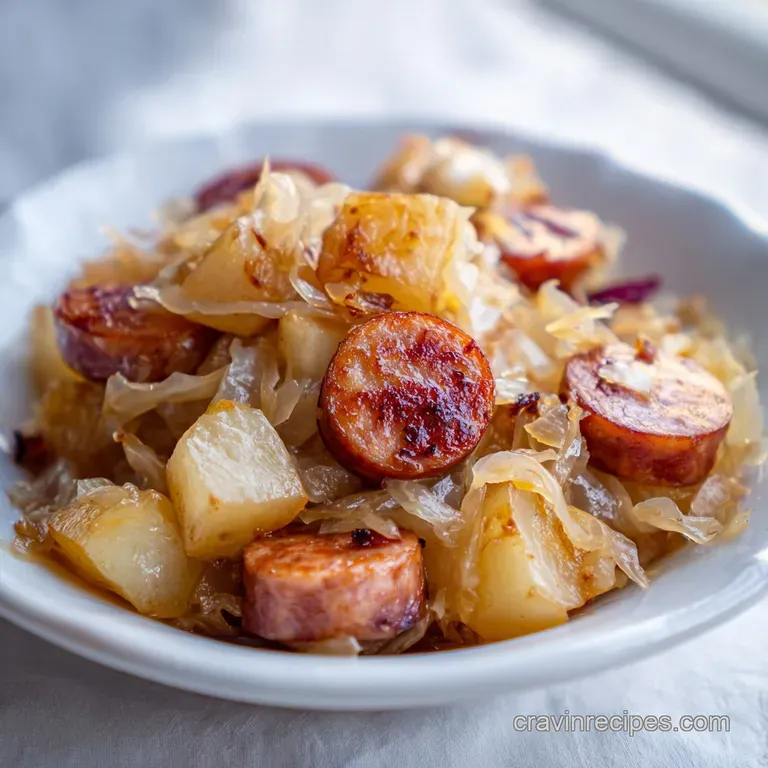
- Time:20 minutes prep + 45 minutes cook = Total 65 minutes
- Flavor/Texture Hook: Mahogany crisped sausage with bubbling, golden Swiss cheese
- Perfect for: Hearty family weeknight dinners or cozy winter meal prep
- Get the Perfect Golden Crust on Your Polish Casserole
- The Secrets to a Hearty and Comforting Bake
- The Right Ingredients for a Proper Kielbasa Bake
- Kitchen Gear for a No Fuss Casserole
- Step-by-Step Guide to a Family Favorite Polish Casserole
- Fixing Common Glitches in Your Savory Bake
- Swapping Flavors for a Custom Comfort Meal
- Saving Leftovers and Reducing Food Waste
- The Best Sides for a Hearty Casserole
- High in Sodium
- Recipe FAQs
- 📝 Recipe Card
Get the Perfect Golden Crust on Your Polish Casserole
That first sound is everything, right? The aggressive sizzle of sliced kielbasa hitting a hot skillet. If you're doing it right, you'll smell that smoky, salty aroma fill the kitchen within seconds. It's the smell of pure comfort, but for a lot of people, this is where the disaster starts.
I've seen so many people treat a Polish Casserole like a dump and bake meal. They toss raw sausage, raw potatoes, and kraut into a pan and wonder why the potatoes are still hard as rocks while the sausage is boiled and grey. It's a total mood killer.
The real secret is treating the pan like a construction site, building layers of flavor instead of just piling things in.
Trust me on this, the difference between a "meh" bake and a showstopper is the sear. We're going for mahogany edges on that meat. When you get that deep browning, you're creating a foundation of flavor that seeps into the potatoes as they bake.
It turns a simple dinner into something that feels like it's been simmering all day.
The Secrets to a Hearty and Comforting Bake
Getting this right isn't about fancy skills, it's just about how the ingredients play together. We're managing moisture and salt, which are the two biggest hurdles in any kielbasa dish.
Fat Rendering: Searing the kielbasa releases rendered fat, which we then use to sauté the onions. This carries the smoky sausage flavor through every single bite.
Starch Gelatinization: The beef broth and the foil cover create a steam chamber. This ensures the Yukon Gold potatoes soften completely without drying out.
Acidity Balance: Rinsing the sauerkraut removes the harsh "vinegar punch" and excess salt, allowing the Swiss cheese and smoked paprika to actually be tasted.
Cheese Fusion: Mixing Swiss and mozzarella gives you the best of both worlds. Swiss provides a nutty, sharp bite, while mozzarella gives that classic, stretchy pull.
- If you want a smokier flavor, use a smoked kielbasa and double the paprika.
- If you prefer a tangier dish, rinse the sauerkraut lightly rather than thoroughly.
- If you're in a rush, use frozen diced potatoes to shave 10 minutes off prep.
The Right Ingredients for a Proper Kielbasa Bake
Picking the right potato is honestly half the battle here. I always go with Yukon Golds because they hold their shape but still get that buttery, velvety interior. Russets tend to fall apart and turn the whole thing into mashed potatoes, which is a different vibe entirely.
Component Analysis
| Ingredient | Science Role | Pro Secret |
|---|---|---|
| Polish Kielbasa | Primary Fat & Salt | Slice into 1/4 inch rounds for maximum surface area browning |
| Yukon Gold Potatoes | Structure & Texture | Keep cuts uniform at 1/2 inch so they cook at the exact same rate |
| Sauerkraut | Acidic Brightness | Always rinse in a colander until the water runs clear |
| Beef Broth | Moisture Agent | Use a low sodium version to avoid an over salted final dish |
Essential Elements and Swaps
- 1 lb Polish Kielbasa, sliced into rounds Why this? Traditional smoky flavor and firm texture
- 1.5 lbs Yukon Gold potatoes, peeled and diced into 1/2 inch cubes Why this? Waxy texture prevents mushiness
- 2 tbsp vegetable oil Why this? High smoke point for searing
- 2 cups sauerkraut, rinsed and drained Why this? Adds essential tang and crunch
- 1 medium yellow onion, diced Why this? Sweetness to balance the salt
- 3 cloves garlic, minced Why this? Pungent aromatic base
- 1 tsp smoked paprika Why this? Deepens the "wood fired" flavor profile
- 1/2 tsp black pepper Why this? Basic heat balance
- 1 cup beef broth Why this? Adds richness and steams potatoes
- 2 cups shredded Swiss cheese Why this? Nutty flavor profile
- 1/2 cup shredded mozzarella cheese Why this? Superior melt and stretch
| Original Ingredient | Substitute | Why It Works |
|---|---|---|
| Polish Kielbasa | Andouille Sausage | Similar spice level. Note: More cayenne heat than traditional Polish |
| Yukon Gold Potatoes | Red Potatoes | Similar waxy texture. Note: Slightly earthier taste |
| Swiss Cheese | Gruyère | Higher fat content. Note: More intense, nutty flavor |
| Beef Broth | Chicken Broth | Lighter profile. Note: Less depth, but still works for steaming |
Kitchen Gear for a No Fuss Casserole
You don't need a professional kitchen for this, but a few specific tools make it much smoother. I always use a heavy bottomed skillet for the searing. If you have a cast iron pan, use it. It holds heat better and gives you that mahogany crust on the sausage without the meat sticking.
A 9x13 inch baking dish is the standard here. If you use a deeper, smaller dish, the potatoes on the bottom might stay hard while the top burns. You want a decent surface area so the beef broth can distribute evenly. Also, don't forget a good slotted spoon.
You want the fat in the pan for the onions, but you don't want to dump a pool of oil into your casserole dish.
Step-by-step Guide to a Family Favorite Polish Casserole
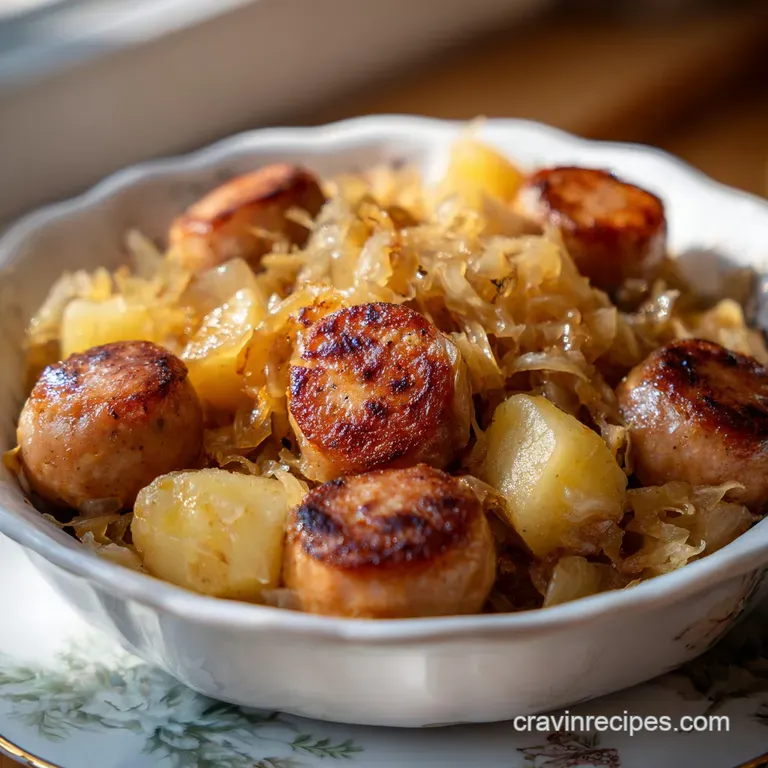
Right then, let's crack on. We're following a specific flow here: sear, layer, steam, and brown.
Phase 1: The Searing Prep
- Heat the vegetable oil in a large skillet over medium high heat. Add the sliced kielbasa and sauté until the edges are mahogany colored and crisp. Note: Don't crowd the pan or the sausage will steam instead of sear.
- Remove the sausage with a slotted spoon, leaving the rendered fat in the pan.
- In the same pan, sauté the diced onions until translucent. Stir in the minced garlic and smoked paprika for 30 seconds until fragrant. Note: Garlic burns quickly, so keep it moving.
Phase 2: The Layering Logic
- Preheat the oven to 375°F (190°C).
- In a 9x13 inch baking dish, create a foundation layer using the diced potatoes. Note: Spread them evenly so no "clumps" stay raw.
- Evenly distribute the rinsed sauerkraut over the potatoes.
- Top the sauerkraut with the seared kielbasa and the sautéed onion garlic mixture.
- Pour the beef broth evenly over the top of the assembly. Note: The broth will sink through the layers to reach the potatoes.
Phase 3: The Golden Finish
- Cover the dish with aluminum foil and bake for 30 minutes. Note: The foil traps the steam needed to soften the potatoes.
- Remove the foil and spread the shredded Swiss and mozzarella cheese across the top.
- Bake uncovered for another 15 minutes, until the cheese is bubbling and golden brown.
Chef's Tip: If you want a truly shatter crisp cheese topping, turn on the broiler for the last 2 minutes. Just stay right there and watch it, because it can go from golden to burnt in ten seconds.
Fixing Common Glitches in Your Savory Bake
Even with a plan, things happen. The most common issue I see is "Soggy Bottom Syndrome," where the potatoes are swimming in liquid but aren't actually cooked. This usually happens if the potatoes are cut too large or the pan is too deep.
Dealing with Hard Potatoes
If you pull the dish out and the potatoes still have a "snap" to them, it's usually a cutting issue. 1/2 inch cubes are the sweet spot. Anything larger needs more time under the foil.
| Problem | Root Cause | Solution |
|---|---|---|
| Potatoes still hard | Cut too large or not enough broth | Cut to exact 1/2 inch; add 1/4 cup more broth |
| Casserole too salty | Sauerkraut not rinsed enough | Rinse kraut under cold water for 60 seconds |
| Watery consistency | Onions not sautéed or too much broth | Sauté onions until liquid evaporates; reduce broth by 2 tbsp |
Avoiding the Salt Trap
Kielbasa and sauerkraut are both salt bombs. If you don't rinse that kraut, the whole dish will taste like a salt lick. I've made this mistake once, and I had to add a squeeze of lemon juice at the end just to cut through the brine.
Common Mistakes Checklist:
- ✓ Rinse sauerkraut thoroughly in a colander.
- ✓ Pat potatoes dry after dicing to prevent excess steaming.
- ✓ Ensure the oven is fully preheated to 375°F before the dish goes in.
- ✓ Use a slotted spoon to avoid adding too much grease.
- ✓ Keep potato cubes uniform in size for even cooking.
Swapping Flavors for a Custom Comfort Meal
This recipe is a great base, but you can easily pivot it. If you're looking for something a bit lighter for a side dish, you might try my Zucchini Onion Pie recipe, but for a main event, this kielbasa bake is king.
Adjusting for Different Tastes
If you want to go low carb, simply swap the potatoes for cauliflower florets. Just keep in mind that cauliflower releases more water, so you should reduce the beef broth by half. For those who love a bit more heat, adding a pinch of crushed red pepper to the onion sauté works wonders.
If you're feeding a crowd, you can easily double this. Just remember to work in batches when searing the sausage. If you crowd the pan, you'll lose that mahogany crust. For larger bakes, I recommend lowering the temp to 350°F (175°C) and extending the covered bake time by 10-15 minutes to ensure the center is hot.
Fresh vs Shortcut Components
| Component | Fresh Approach | Shortcut Approach | Flavor Impact |
|---|---|---|---|
| Sausage | Whole log, hand sliced | Pre sliced rounds | Minimal; fresh slicing allows for custom thickness |
| Potatoes | Fresh peeled/diced | Frozen diced potatoes | Slightly softer texture with frozen |
| Onion/Garlic | Freshly minced | Jarred minced garlic | Fresh has a much sharper, cleaner bite |
For another heavy hitter involving sausage, you can't go wrong with a Sausage Breakfast Casserole, which uses a similar layering logic but with a morning twist.
Saving Leftovers and Reducing Food Waste
This Polish Casserole actually tastes better the next day. The flavors have time to meld, and the potatoes absorb more of that smoky beef broth.
Storage Guidelines
Store leftovers in an airtight container in the fridge for up to 4 days. If you're freezing it, I recommend doing so before adding the cheese. Once the cheese is baked on, it can get a bit rubbery when frozen and thawed. You can freeze the base for up to 2 months.
To reheat, avoid the microwave if you can. It makes the sausage rubbery. Instead, put a slice in a toaster oven or a pan with a splash of water and cover it. This restores the moisture and keeps the cheese from separating.
Zero Waste Tips
Don't throw away those onion skins and potato peels! If you keep a "scrap bag" in your freezer, you can simmer those peels with some carrot tops and celery ends to make a homemade vegetable stock.
Also, if you have leftover sauerkraut, it's brilliant mixed into a tuna salad or served alongside a grilled pork chop for a quick dinner.
The Best Sides for a Hearty Casserole
Since this dish is heavy on fats and starches, you need something acidic or fresh to cut through the richness. A crisp green salad with a sharp vinaigrette is the gold standard here. The acidity of the dressing cleanses the palate between bites of cheesy sausage.
Steamed green beans or roasted Brussels sprouts also work perfectly. The bitterness of the sprouts complements the smokiness of the kielbasa. If you're feeling traditional, a side of rye bread with salted butter is the way to go.
It's the perfect vessel for scooping up any leftover beef broth and cheese from the bottom of the pan.
High in Sodium
980 mg 980 mg of sodium per serving (43% 43% of daily value)
The American Heart Association recommends a daily sodium limit of 2,300mg to reduce the risk of high blood pressure and heart disease.
Tips to Reduce Sodium
-
Swap the Broth-30%
Replace the standard beef broth with a low-sodium or no-salt-added version to significantly cut down on hidden salt.
-
Better Sausage Choice-25%
Use a low-sodium kielbasa or substitute with fresh, un-cured turkey sausage to avoid processed salt cures.
-
Rinse Sauerkraut-20%
Thoroughly rinse the sauerkraut under cold running water for several minutes to wash away the salty brine.
-
Modify the Cheese-15%
Reduce the total amount of Swiss and mozzarella by half, or use a fresh mozzarella which typically contains less sodium.
-
Boost Aromatics
Increase the amount of garlic, onion, and smoked paprika to add depth and flavor without adding any sodium.
Recipe FAQs
What is the best way to cook the kielbasa for this casserole?
Sauté in vegetable oil over medium-high heat. Cook until the edges are mahogany-colored and crisp before layering.
Can I use russet potatoes instead of Yukon Gold?
No, stick with Yukon Gold. These potatoes maintain their shape and texture better during the baking process.
How to freeze Polish casserole leftovers?
Freeze the base before adding the cheese. This prevents the cheese from becoming rubbery and allows storage for up to 2 months.
How to reheat the casserole without the sausage becoming rubbery?
Place a slice in a toaster oven or a pan with a splash of water. Cover the pan to restore moisture and keep the cheese from separating.
Is it true I should leave the sauerkraut unrinsed for more flavor?
No, this is a common misconception. Rinsing and draining the sauerkraut ensures the casserole isn't overwhelmingly salty.
How long should I bake the casserole before adding the cheese?
Bake covered with aluminum foil for 30 minutes. This steams the potatoes and sauerkraut before the final browning phase.
Can I use only Swiss cheese instead of a blend?
Yes, that works. While mozzarella provides a better stretch, Swiss delivers the primary flavor profile for this dish.
Polish Casserole with Yukon Gold Potatoes: Golden and Baked