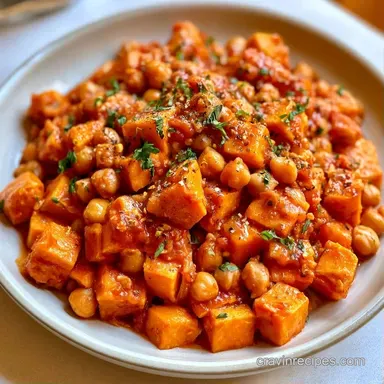
Slow Cooker Sweet Potato Curry with Chickpeas
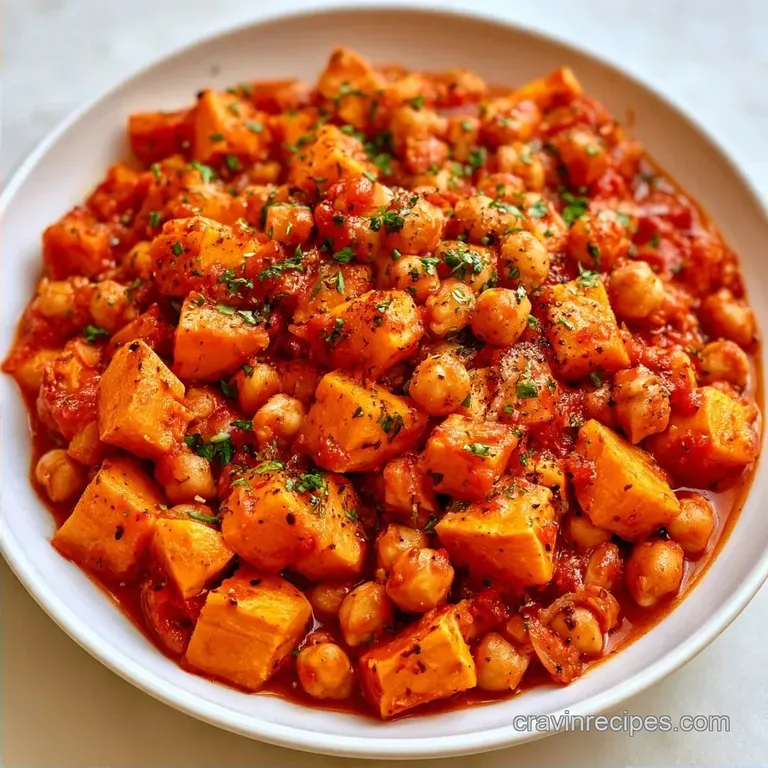
- Time: 15 mins prep + 4 hours slow-cook
- Taste Profile: Creamy, warming, and slightly sweet
- Ideal for: Mid-week meals or batch cooking
The fragrance of toasted ginger and cumin wafts through the air the moment the lid is lifted, filling your home with a cozy, golden scent. It is the sort of aroma that brightens even the gloomiest of afternoons.
Drawing inspiration from classic Indian profiles, this recipe emphasizes an earthy, mellow sweetness achieved through a steady, slow simmer.
I first created this when I needed a meal that could just bubble away in the background while I worked. Most curries require a fair amount of sautéing and stirring, but this version lets the machine do the heavy lifting.
It's a stress free way to build deep, layered flavors without the risk of burning your spices.
You can expect a thick, velvety sauce that clings to tender chunks of potato and chickpeas. The Slow Cooker Sweet Potato Curry is hearty enough to be the main event, yet light enough that you won't feel weighed down. Let's get started with the process.
Slow Cooker Sweet Potato Curry
Slow Heat: The steady, low temperature allows the spices to migrate into the center of the sweet potato cubes, which usually stay bland in quick recipes.
Starch Release: As the potatoes cook, they release a bit of natural starch into the broth, which gives the sauce a naturally thick body before the coconut milk even hits the pot.
Coconut Timing: Adding the coconut milk at the end prevents it from separating or losing its fresh, creamy taste during the long heat cycle.
| Method | Time | Texture | Best For |
|---|---|---|---|
| Slow Cooker | 4-8 hours | Soft, cohesive | Hands off prep |
| Stovetop | 45 mins | Defined chunks | Quick cravings |
| Oven Braise | 2 hours | Concentrated | Large batches |
Why These Ingredients
The sweet potatoes provide the bulk and the natural sweetness that balances the salt and spice. If you're out of these, butternut squash is a great swap because it has a similar density.
Coconut milk is what makes this dish feel like a treat. It adds a rich, fatty base that carries the curry powder and turmeric. For those avoiding coconut, a cashew cream works well, though it changes the flavor profile slightly.
Chickpeas add the necessary protein and a bit of a "bite" to contrast the soft potatoes. You can use cannellini beans if you want something more neutral.
The lime juice is the most important part of the finish. Without that hit of acid, the curry can taste a bit flat. It cuts through the richness of the coconut milk and wakes up the whole dish.
Recipe Specs
- 2 lbs (900g) sweet potatoes, peeled and cut into 1 inch cubes Why this? Holds shape well during slow cooking (Substitute: Butternut squash)
- 1 medium (150g) yellow onion, finely diced Why this? Adds a savory base layer (Substitute: Shallots)
- 1 can (15 oz / 425g) chickpeas, drained and rinsed Why this? Hearty plant protein (Substitute: White beans)
- 1 can (14.5 oz / 411g) diced tomatoes, with juices Why this? Adds acidity and thickness (Substitute: Tomato puree)
- 3 cloves (15g) garlic, minced Why this? Sharp, aromatic depth (Substitute: Garlic powder)
- 1 tbsp (15g) fresh ginger, grated Why this? Fresh zingy heat (Substitute: Ground ginger)
- 2 tbsp (16g) mild curry powder Why this? Main flavor profile (Substitute: Garam masala)
- 1 tsp (2g) ground turmeric Why this? Earthy color and flavor (Substitute: Omit if unavailable)
- ½ tsp (1g) salt Why this? Enhances all other spices (Substitute: Sea salt)
- ¼ tsp (0.5g) crushed red pepper flakes Why this? Subtle back of-throat heat (Substitute: Cayenne)
- 1 can (13.5 oz / 400ml) full fat coconut milk Why this? Creaminess and richness (Substitute: Heavy cream)
- 1 cup (240ml) vegetable broth Why this? Provides the simmering liquid (Substitute: Water)
- 1 tbsp (15ml) lime juice, freshly squeezed Why this? Brightens the final taste (Substitute: Lemon juice)
Tools Needed
I love how minimal the equipment requirements are for this meal. A 6 quart slow cooker works best; however, if yours is smaller, simply cut the ingredients in half.
To get those potato cubes exactly 1 inch, use a sturdy knife and a prep board. Consistent sizing is key, otherwise, you'll have a mix of overcooked mush and underdone chunks.
Lastly, use a whisk and a small bowl to combine the spices and broth. This ensures the turmeric is fully integrated rather than floating in clumps on the surface of the curry.
Step-by-step Cooking
- Add the diced sweet potatoes, onion, garlic, ginger, and chickpeas to the slow cooker. Note: Arrange the potatoes in a single or double layer to ensure they cook evenly.
- In a small bowl, stir together the vegetable broth, curry powder, turmeric, salt, and red pepper flakes until smooth.
- Pour the liquid over the vegetables and stir to coat them thoroughly, then layer the diced tomatoes on top.
- Cover and cook on High for 3-4 hours until the sweet potatoes are fork tender. Alternatively, set to Low for 7-8 hours if cooking during the workday.
- Open the lid and mix in the fresh lime juice and full fat coconut milk.
- Change the slow cooker to 'Warm' for another 10-15 minutes until the sauce thickens and looks glossy.
- Taste the sauce; if it feels too rich, add another squeeze of lime.
- Stir once more and serve right away.
Fixing Common Issues
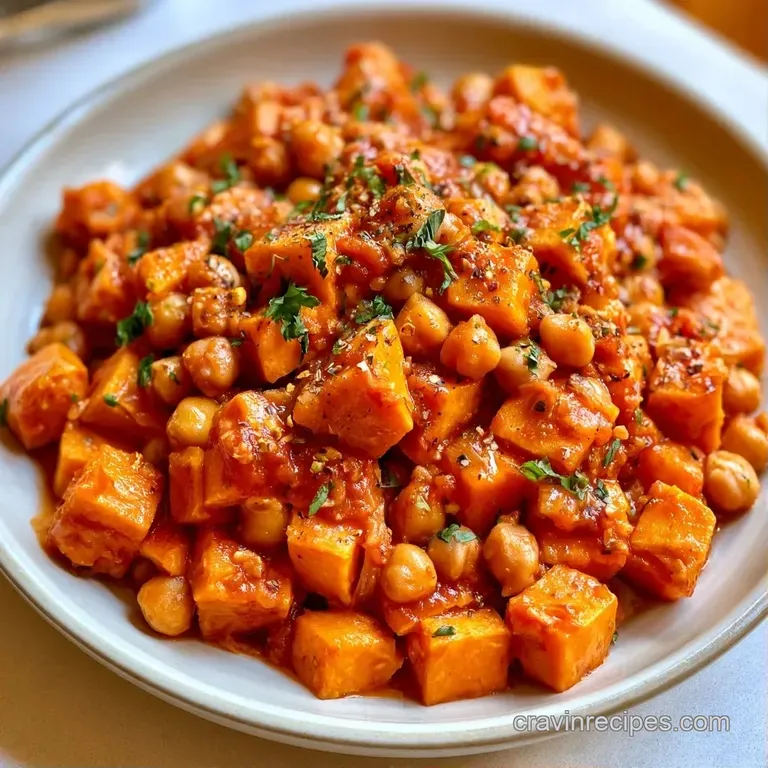
Sauce Is Too Watery
This typically occurs when the tomatoes are overly juicy or the potatoes didn't release enough starch. To resolve this, use a spoon to mash 3 or 4 of the cooked sweet potato cubes directly into the sauce. Stir them in, and the natural starch will thicken the liquid instantly.
Potatoes Turned Mushy
If your vegetables have lost their structure, it is likely because the cubes were cut too small or simmered on High for too long. For your next batch, cut the potatoes into larger 1.5 inch chunks. To learn more about stabilizing textures, my Creamy Poblano Sauce recipe explains how balancing fats and acids keeps a sauce consistent.
Lacking Brightness
If the curry tastes "brown" or flat, it needs a boost of acidity. Stir in an additional teaspoon of lime juice or a tiny splash of apple cider vinegar. This awakens the spices and cuts through the richness of the coconut fat.
Adjusting Batch Size
Adjusting the portion size for this slow cooker sweet potato curry is simple, though it requires more than just basic multiplication.
If you are halving the recipe, try to use a smaller appliance. Using a large vessel for a small batch can lead to faster evaporation, increasing the risk of scorching the bottom. Cut the cooking time by approximately 20%.
When doubling the batch, exercise caution with the salt and red pepper flakes. Start by increasing the seasoning and heat to only 1.5x the initial amount. It is easier to season further later than it is to fix an over salted dish.
Additionally, decrease the vegetable broth by about 10%, as larger pots tend to retain more steam.
| Goal | What to change |
|---|---|
| Thicker sauce | Mash 4 potato cubes |
| More heat | Add ¼ tsp red pepper |
| Lighter feel | Use light coconut milk |
Storage and Reheating
The flavors deepen overnight, making the curry even more delicious the following day. Keep it in a glass jar in the refrigerator for a maximum of 4 days.
If freezing, ensure the dish has cooled down entirely. Transfer to freezer safe bags or containers for storage up to 3 months. Defrost it in the refrigerator overnight before serving.
I find the stovetop produces better results than the microwave when reheating. Warm the curry in a pot over medium low heat; since the sauce thickens while chilled, stir in some water or broth to reach the right consistency. Be careful to stir gently to keep the potatoes intact.
To reduce waste, save the sweet potato skins. Coat them in oil and salt, then roast at 400°F (200°C) for 10 minutes for a crunchy treat.
Best Serving Ideas
The classic way to serve this is over a bed of basmati or jasmine rice. The grains soak up the sauce and make the meal feel complete.
If you want something more filling, toasted naan or garlic roti are the way to go. Use the bread to scoop up the chickpeas and potatoes. It's a great way to turn this into a family style meal.
For a lighter option, I've found that serving the curry over steamed baby spinach or sautéed kale works wonders. The bitterness of the greens balances the sweetness of the potatoes. A dollop of Greek yogurt or a sprinkle of fresh cilantro on top adds a final touch of freshness.
Different Flavor Twists
If you want a slow cooker chicken sweet potato curry, add 1 lb of boneless, skinless chicken thighs (cut into bite sized pieces) at the very start. Since chicken thighs handle slow cooking better than breasts, they stay juicy. Follow USDA guidance and ensure the chicken reaches an internal temperature of 165°F.
For a slow cooker sweet potato curry without coconut milk, replace the can of coconut milk with a mixture of vegetable broth and a tablespoon of almond butter or cashew butter. It provides a similar richness but a nuttier flavor.
To make it a slow cooker sweet potato chickpea curry, simply double the amount of chickpeas and add a handful of frozen peas during the last 30 minutes of cooking. This adds a pop of color and extra protein.
If you're aiming for a more authentic Slow cooker sweet potato curry Indian style, swap the mild curry powder for a mix of toasted cumin, coriander, and a pinch of cinnamon. You can also create your own Basic Spice Blend to customize the heat level. Finish the dish with a pinch of garam masala stirred in right at the end for a punch of aromatic warmth.
High in Sodium
840 mg 840 mg of sodium per serving (37% 37% of daily value)
The American Heart Association recommends a daily sodium limit of no more than 2,300 mg to maintain heart health and lower blood pressure.
Tips to Reduce Sodium
-
Swap the Broth-30%
Replace the standard vegetable broth with a low-sodium or no-salt added version to significantly cut the liquid's sodium content.
-
Omit Added Salt-25%
Remove the 1/2 tsp of added salt entirely; the curry powder and broth already provide a base level of saltiness.
-
No-Salt Chickpeas-20%
Use no-salt added canned chickpeas or substitute with dried chickpeas soaked and cooked from scratch.
-
Better Tomato Choice-20%
Select a no-salt added variety of canned diced tomatoes to reduce the sodium hidden in the canning juices.
-
Boost Aromatics
Increase the amount of fresh ginger and minced garlic to enhance the depth of flavor without needing extra salt.
Recipe FAQs
How long to cook sweet potato curry in a slow cooker?
Cook on High for 3-4 hours or Low for 7-8 hours. Ensure the sweet potatoes are fork tender before you stir in the coconut milk.
Can you put raw sweet potatoes in a slow cooker?
Yes, raw potatoes work perfectly. Just peel and cut them into 1 inch cubes to ensure they cook evenly throughout the process.
What is an easy way to make sweet potato curry?
Combine the diced vegetables and chickpeas in your slow cooker. Whisk the broth and spices separately before pouring them over the mix and cooking on high for 4 hours.
Do you need to pre-cook sweet potatoes before adding them to the curry?
No, and here's why. Slow cookers provide consistent, low heat that softens the tubers perfectly without the extra step of boiling or roasting.
How to thicken the sauce if it feels too thin?
Leave the curry on the 'Warm' setting for 10-15 minutes after stirring in the coconut milk. This allows the sauce to reduce and thicken naturally.
Can I freeze this dish for later?
Yes, it freezes well for up to 3 months. Let the curry cool completely and store it in freezer safe bags or containers.
What's the best way to reheat leftovers?
Heat the curry in a pot over medium low heat. Add a splash of vegetable broth to loosen the sauce, as it thickens significantly while chilled.
Is it possible to substitute the broth?
Yes, a light vegetable stock works well. If you enjoyed the balance of salt and acid here, the same principle is used in our savory finger food sauce.
Slow Cooker Sweet Potato Curry