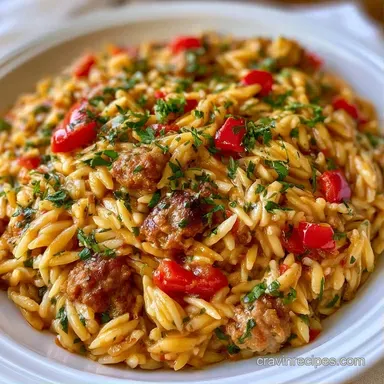
One-Pot Tuscan Sausage Orzo
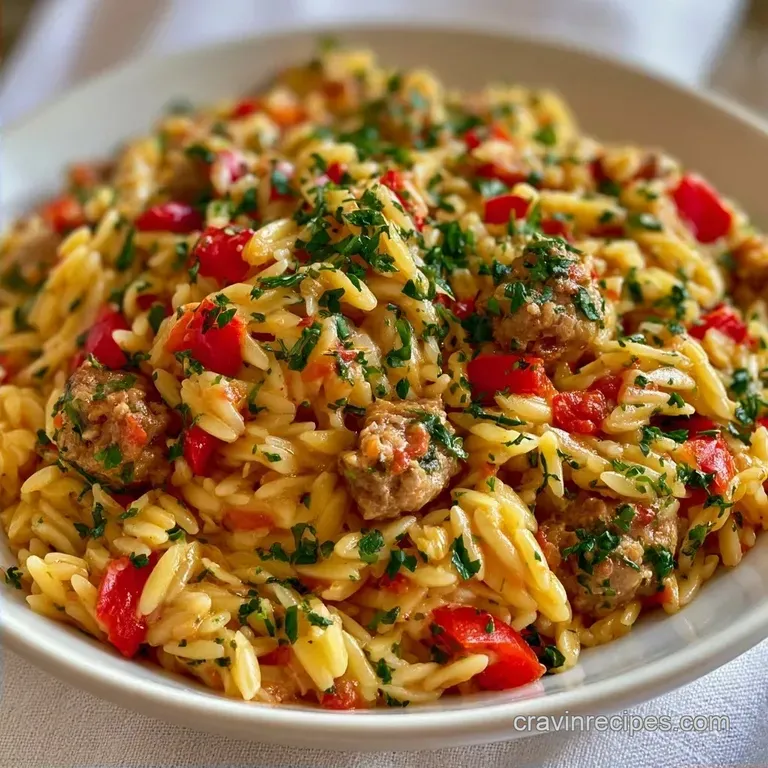
- Time: 10 min active + 20 min cook
- Flavor/Texture Hook: Creamy, glossy sauce with crispy sausage bits
- Perfect for: Busy weeknights and family dinners
- Hearty One Pan Tuscan Sausage Orzo
- Why This Texture Works
- Ingredient Deep Dive
- Essential Recipe Specs
- Ingredient List & Swaps
- Bringing It Together
- Tips and Pitfalls
- Troubleshooting Common Issues
- Flavor Variations
- Adjusting the Portion
- Common Kitchen Myths
- Storage Guidelines
- Perfect Complements
- Very High in Sodium
- Recipe FAQs
- 📝 Recipe Card
Hearty One Pan Tuscan Sausage Orzo
That loud, aggressive sizzle of Italian sausage hitting a hot skillet is the best sound in the kitchen. It's the signal that dinner is actually happening, even if the day was a total disaster. I usually make this on those Tuesdays when the kids are grumpy and I have exactly zero energy for a mountain of dishes.
This Tuscan Sausage Orzo is the kind of meal that feels like a hug in a bowl. It's got that deep, savory meat flavor balanced by the brightness of lemon and the earthy hit of kale. You get everything you need in one pan, so you aren't scrubbing pots for an hour after you eat.
Expect a dish that's thick and comforting, almost like a risotto but without the constant stirring. The pasta absorbs the chicken broth and cream, turning into a lush, cozy base for the sausage and greens. It's a no fuss win for any home cook.
Why This Texture Works
The real magic here happens before the liquid even touches the pan. By toasting the dry pasta, you change how it interacts with the broth.
Toasting the Grains: Frying the orzo in fat creates a nutty flavor and helps the grains hold their shape. This prevents the Tuscan Sausage Orzo from turning into a mushy paste.
Starch Release: Because the pasta cooks directly in the broth, the starches stay in the pan rather than being drained away. This is what makes the sauce thick and glossy without needing a flour thickener. If you're curious about basic pasta techniques, check out how to cook orzo for more tips.
According to the experts at Serious Eats, toasting grains or pasta before simmering adds a layer of complex, toasted flavor that you just can't get from boiling.
| Method | Time | Texture | Best For |
|---|---|---|---|
| Stovetop | 30 mins | Creamy & Glossy | Weeknight ease |
| Oven Baked | 45 mins | Slightly Firmer | Large crowds |
Ingredient Deep Dive
Not every ingredient in this Tuscan Sausage Orzo is just there for bulk. Each one has a specific job to do to keep the flavors balanced and the texture right.
Sausage: This is your main flavor engine. The fat from the sausage renders out and becomes the cooking oil for the vegetables and the toast for the orzo.
Chicken Broth: It provides the hydration for the pasta. Using a low sodium version is smarter here because the sausage and Parmesan are already quite salty.
Kale: This adds a necessary bitter note and a pop of color. It cuts through the richness of the heavy cream and cheese.
Parmesan: This is the binder. It melts into the liquid to create a cohesive, salty sauce that clings to every grain of pasta.
Essential Recipe Specs
Before you start, make sure you have your gear ready. Using the right pan prevents the pasta from sticking and ensures the sausage browns evenly.
For this recipe, a 12 inch deep skillet is the way to go. A wide base allows the sausage to sear without crowding, and the depth keeps the broth from bubbling over. A sturdy wooden spoon or silicone spatula is a must for scraping up those brown bits from the bottom of the pan.
If you don't have a deep skillet, a Dutch oven works too. Just be aware that the liquid might take a minute longer to reduce because of the narrower surface area.
Ingredient List & Swaps
Get these ready on your counter. I've listed some budget friendly swaps if you're missing something.
- 1 lb Italian sausage (casings removed) Why this? Provides the primary savory base and fat.
- 1 tbsp olive oil
- 1 medium yellow onion, finely diced
- 3 cloves garlic, minced
- 1 red bell pepper, diced
- 1.5 cups uncooked orzo pasta Why this? Small shape creates a risotto like feel.
- 3 cups chicken broth, low sodium
- 0.5 cup heavy cream Why this? Adds the necessary richness to the sauce.
- 1 tsp dried oregano
- 0.5 tsp red pepper flakes
- 3 cups fresh kale, stems removed and chopped
- 0.5 cup grated Parmesan cheese
- 1 tbsp fresh lemon juice Why this? Brightens the heavy fats.
- salt to taste
- black pepper to taste
| Original Ingredient | Substitute | Why It Works |
|---|---|---|
| Italian Sausage | Ground Turkey + Italian Seasoning | Leaner option. Note: You'll need more olive oil as turkey has less fat |
| Heavy Cream | Full fat Coconut Milk | dairy-free alternative. Note: Adds a slight coconut hint |
| Kale | Fresh Spinach | Similar nutrients. Note: Wilt faster, so add at the very last second |
| Parmesan | Pecorino Romano | Similar salty profile. Note: Stronger, tangier taste |
Bringing It Together
Follow these steps to get that classic, creamy Tuscan Sausage Orzo. Pay attention to the smells and colors, as they tell you when to move to the next phase.
- Heat the olive oil in a 12 inch deep skillet over medium high heat. Add the crumbled sausage and cook until mahogany colored and crispy on the edges.
- Add the diced onion and red pepper to the skillet. Sauté for 3–5 minutes until the onions are translucent and the peppers have softened.
- Stir in the minced garlic and cook for 60 seconds until fragrant.
- Push the meat and vegetables to the edges of the pan. Pour the dry orzo into the center and stir constantly for 2 minutes until the pasta turns pale golden brown and smells nutty.
- Stir in the chicken broth, dried oregano, and red pepper flakes. Bring to a gentle simmer and cook until the orzo is tender and most of the liquid is absorbed.
- Stir in the heavy cream and grated Parmesan cheese, stirring until the sauce is thick and glossy.
- Fold in the chopped kale and stir in the fresh lemon juice. Cook for 1-2 minutes until the kale is just wilted.
- Season with salt and black pepper to taste before serving.
Chef's Note: If the sauce looks too thick after adding the cheese, splash in an extra 2 tablespoons of broth to loosen it up. It should be pourable, not a brick.
Tips and Pitfalls
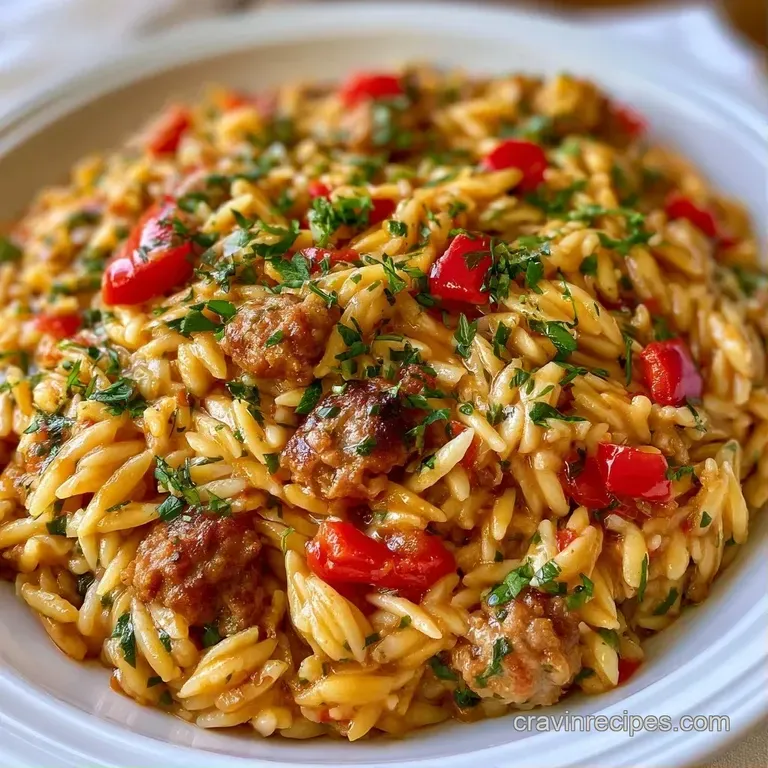
Cooking a one pot Tuscan Sausage Orzo is simple, but there are a few places where things can go sideways.
Troubleshooting Common Issues
| Issue | Solution |
|---|---|
| Orzo sticking | This usually happens if the heat is too high during the simmer or if you didn't stir enough during the toasting phase. The starch can settle at the bottom and scorch. |
| The sauce is too thick | Orzo keeps absorbing liquid even after you turn off the heat. If it looks like a porridge, add a splash of broth or water. It'll bring back that silky texture. |
| Stop garlic from burning | Garlic burns in seconds if the pan is screaming hot. Always add it after the onions and peppers have softened, and only leave it in for about a minute before adding the pasta or liquid. |
Flavor Variations
You can easily tweak this Tuscan Sausage Orzo to fit what's in your fridge. It's a very forgiving recipe.
If you want a lighter version, swap the pork sausage for chicken or turkey sausage. It won't be as rich, but it's still satisfying. For those who love a kick, double the red pepper flakes or stir in a teaspoon of Calabrian chili paste during the garlic step.
If you're in the mood for something even more decadent, you can add sun dried tomatoes along with the bell peppers. The sweetness of the tomatoes pairs beautifully with the salty Parmesan. For another creamy inspiration, you might enjoy my Tuscan Garlic Chicken which uses similar flavor profiles.
Quick Decision Guide: If you want it spicier, use "Hot" Italian sausage. If you want it heartier, add 1/2 cup of frozen peas. If you want it brighter, stir in fresh parsley at the end.
Adjusting the Portion
Scaling this Tuscan Sausage Orzo is pretty straightforward, but you can't just double everything blindly.
Scaling Down (Half Batch): Use a smaller skillet (about 8 or 10 inches). Reduce the cooking time for the vegetables by about 20% since there's less volume in the pan. For the seasonings, start with a pinch and taste as you go.
Scaling Up (Double Batch): Don't double the salt or red pepper flakes immediately. Start with 1.5x the amount and adjust at the end. You'll likely need to reduce the chicken broth by about 10% because a larger volume of food retains more steam, which means less evaporation.
Work in batches when browning the sausage to ensure it actually sears instead of steaming in its own juices.
| Batch Size | Pan Size | Liquid Adjustment | Heat Tip |
|---|---|---|---|
| 1/2 Batch | 8-10" Skillet | Exact ratio | Medium heat |
| Full Batch | 12" Skillet | Exact ratio | Medium high |
| 2x Batch | Large Pot/Dutch Oven | Reduce broth by 10% | Brown meat in batches |
Common Kitchen Myths
There's a lot of noise about one pot pasta. Let's clear a few things up.
Some people say you have to sear meat to "seal in the juices." That's not actually how it works. Searing creates flavor through browning, but the moisture loss happens regardless. We sear the sausage for the taste, not to keep it "juicy."
Another myth is that you can't get a creamy sauce without a roux (flour and butter). In this Tuscan Sausage Orzo, the starch from the pasta does all the work. As the orzo simmers, it releases amylose into the broth, creating a natural thickener.
Storage Guidelines
This dish stays great in the fridge, though the pasta will continue to soak up the sauce as it sits.
Fridge: Store in an airtight container for up to 4 days.
Freezer: I don't recommend freezing this specific recipe. The cream and cheese can separate, and the kale can get a bit slimy upon thawing. If you must, freeze it in small portions for no more than 2 months.
Reheating: The best way to bring back the texture is on the stovetop over medium low heat. Add a splash of water or broth to loosen the sauce. Avoid the microwave if possible, as it can make the sausage rubbery and the sauce break.
Zero Waste Tip: Don't toss the kale stems. Chop them very finely and sauté them with the onions at the start. They add a great crunch and extra nutrients to the Tuscan Sausage Orzo.
Perfect Complements
Since this Tuscan Sausage Orzo is quite rich, you want sides that offer a crisp or acidic contrast.
A simple arugula salad with a lemon vinaigrette is the way to go. The peppery greens and sharp citrus cut through the creaminess of the pasta. You could also serve this with some crusty sourdough bread to mop up every last drop of the sauce.
If you're looking for a vegetable side, roasted carrots or steamed broccoli with a bit of garlic work well. Avoid other heavy starches like mashed potatoes, as the orzo is already very filling. Keep the sides light, and you've got a balanced family meal.
Very High in Sodium
1210 mg 1210 mg of sodium per serving (53% 53% of daily value)
The American Heart Association recommends a daily sodium limit of no more than 2,300 mg, with an ideal limit of 1,500 mg for most adults to reduce cardiovascular risk.
Tips to Reduce Sodium
-
Swap the Broth-30%
Replace the low-sodium chicken broth with homemade unsalted stock or water mixed with a small amount of garlic and onion powder.
-
Substitute the Sausage-25%
Use ground turkey or lean pork and season it yourself with fennel seeds, crushed red pepper, and garlic to avoid the high salt in processed Italian sausage.
-
Eliminate Added Salt-25%
Completely omit the 'salt to taste'; the Parmesan and sausage already provide significant sodium levels.
-
Limit the Parmesan-15%
Reduce the grated Parmesan cheese by half or use a small amount of a high intensity aged cheese to maintain flavor with less volume.
-
Enhance with Acid and Herbs
Increase the fresh lemon juice and dried oregano to brighten the flavors, making the dish taste seasoned without needing extra salt.
Recipe FAQs
What is orzo pasta?
It is a small, rice shaped pasta. Despite its appearance, it is made from wheat and behaves like other pasta types during the cooking process.
Can I replace the orzo with brown rice?
No, brown rice will not yield the same creamy result. Orzo releases starches that thicken the sauce, whereas brown rice remains separate. If you enjoyed the pan-searing technique used for the sausage here, see how the same principle works in our classic chicken piccata.
Does this recipe require butter for creaminess?
No, butter is not used in this recipe. The rich, creamy texture is achieved through the combination of heavy cream and grated Parmesan cheese.
Can I substitute milk for heavy cream?
No, milk will be too thin. Heavy cream provides the necessary fat and thickness to create a glossy sauce that clings to the pasta.
Can this Tuscan orzo be served cold as a salad?
No, the texture changes when chilled. Because of the cream and cheese, the sauce will thicken and become heavy rather than refreshing like a traditional vinaigrette based pasta salad.
How to store and reheat the leftovers?
Store in an airtight container in the fridge for up to 4 days. Reheat on the stovetop over medium low heat with a splash of chicken broth to loosen the sauce.
What happens if the orzo absorbs all the liquid too quickly?
Simply stir in a bit more chicken broth. Continue adding small amounts of liquid until the desired creamy consistency is restored.
Tuscan Sausage Orzo